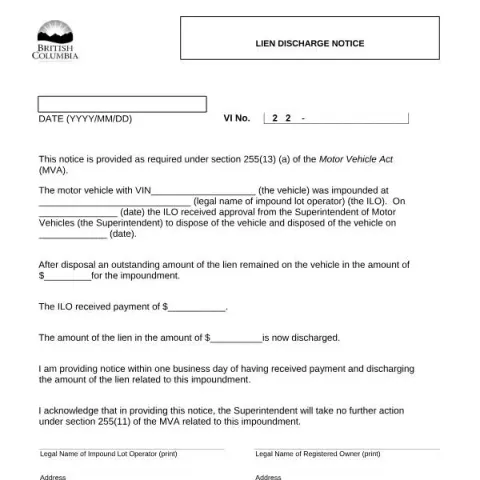
Understanding the Link Discharge Notice (Form MV0728) in British Columbia
The Link Discharge Notice (Form MV0728) is an official document issued by the Ministry of Public Safety and Solicitor General in British Columbia. It serves a specific purpose within the province’s vehicle impoundment and lien management system, primarily relating to the resolution of liens following the disposal of impounded vehicles.
What is the Link Discharge Notice and When Is It Used?
This form is used to formally notify relevant parties that the lien on a vehicle has been discharged after the vehicle has been impounded, disposed of, and the associated lien amount has been paid. It is issued by the Impound Lot Operator (ILO) once the vehicle has been disposed of and the outstanding lien amount has been settled.
The notice is required under section 255(13)(a) of the Motor Vehicle Act (MVA), which governs vehicle impoundments, lien rights, and disposal procedures in British Columbia. It ensures transparency and legal clarity regarding the status of a vehicle’s lien after disposal.
Who Needs to Use This Form?
- Impound Lot Operators (ILOs): They are responsible for completing and submitting the form once the vehicle has been disposed of and payment has been received.
- Registered Vehicle Owners: They may receive this notice as proof that the lien has been discharged following payment.
Key Information Required on the Form
When filling out the Link Discharge Notice, the following details are essential:
- Date of notice issuance: The date when the form is completed.
- Vehicle Identification Number (VIN): The unique identifier of the vehicle involved.
- Impound Lot Operator’s name and contact details: Including the legal name, address, and contact information.
- Date of impoundment and disposal: When the vehicle was impounded and subsequently disposed of.
- Disposal approval date: The date the Superintendent of Motor Vehicles approved the disposal.
- Outstanding lien amount before payment: The amount owed for the impoundment.
- Payment received: The amount paid by the vehicle owner or responsible party.
- Discharged lien amount: The remaining lien amount after payment.
- Signatures: Signed by the authorized representative of the ILO and the registered owner.
How to Submit the Form
The completed Link Discharge Notice must be submitted via email to RoadSafetyBC at [email protected]. This submission should include all relevant details and signatures to ensure the process is legally valid and properly documented.
Points of Attention and Practical Tips
- Timeliness: The form should be submitted within one business day of receiving payment and discharging the lien.
- Accuracy: Ensure that all details, especially VIN, dates, and monetary amounts, are correct to avoid delays or legal issues.
- Signatures: The form requires signatures from both the impound lot operator and the vehicle owner or their authorized representative.
- Retention of Records: Keep copies of the completed form and related payment receipts for your records and potential future reference.
Legal Implications
By completing and submitting the Link Discharge Notice, the impound lot operator confirms that the lien related to the impoundment has been fully discharged. This action signals to the Superintendent of Motor Vehicles and other authorities that no further lien-related actions are necessary concerning this vehicle.
Fill in your form directly online
No printing: type your details into the boxes of the official form, tick, then download the PDF ready to send.
- 1Type into the form boxes
- 2Tick in one click
- 3Save and download the PDF
It is important to follow the prescribed procedures carefully to ensure compliance with the Motor Vehicle Act and avoid legal complications related to vehicle ownership and lien rights.
Conclusion
The Link Discharge Notice (Form MV0728) is a crucial document in the vehicle impoundment process in British Columbia. It provides legal clarity that the lien on a vehicle has been settled following its disposal. Proper completion and timely submission of this form help maintain transparent records and uphold legal standards in vehicle management.