Understanding the ICBC Letter of Authorization from the Lessee (Form APV380)
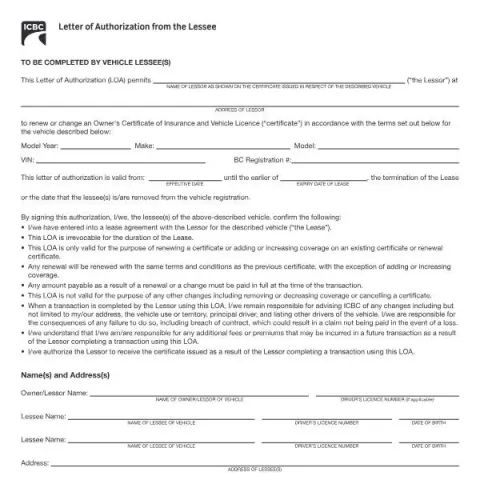
The Letter of Authorization from the Lessee (form code: APV380) is an official document issued by the Insurance Corporation of British Columbia (ICBC). It plays a crucial role in vehicle registration and insurance processes, particularly when a vehicle's owner (lessor) needs to authorize a third party (lessor or agent) to manage certain administrative tasks related to the vehicle's insurance certificate and license renewal. This article explains when and why you might need to use this form, what information it requires, how to properly complete and submit it, and key points to watch out for.
When to Use the Letter of Authorization (LOA)
This form is specifically used in situations where the vehicle owner or lessee authorizes a third party, typically a lessor or an authorized representative, to handle the renewal or modification of the vehicle’s insurance certificate or license. Common scenarios include:
- Renewing the vehicle’s insurance or license on behalf of the owner or lessee.
- Adding or increasing coverage on an existing insurance certificate.
- Changing the details of the vehicle registration in accordance with a lease agreement.
It is important to note that the LOA is only valid for these purposes. It does not authorize the removal or reduction of coverage, nor does it permit cancellation of the insurance or registration.
Key Information Required on the Form
To ensure the ICBC processes your request smoothly, the form must be filled out accurately. The main sections include:
Details of the Lessor (Owner of the Vehicle)
- Name of the lessor as shown on the vehicle’s certificate.
- Address of the lessor.
- Vehicle details: Model Year, Make, Model, VIN, BC Registration Number.
Details of the Lessee(s)
- Name(s) of the lessee(s).
- Address(es) of the lessee(s).
- Driver’s Licence Number(s) and Date(s) of Birth (if applicable).
Authorization Period
The form specifies the effective date and expiry date of the authorization, which typically aligns with the lease term or until the lessee is removed from the registration.
How to Complete and Submit the Form
When filling out the LOA, ensure all information is accurate and legible. Both lessee(s) must sign the document, and if signing on behalf of a company, the signer’s position or title should be indicated. The completed form must be presented in person to an ICBC Autoplan broker; photocopies or faxed copies are not acceptable.
Fill in your form directly online
No printing: type your details into the boxes of the official form, tick, then download the PDF ready to send.
- 1Type into the form boxes
- 2Tick in one click
- 3Save and download the PDF
Once submitted, the ICBC will process the request to renew or modify the vehicle’s insurance certificate or license as specified. The lessee retains responsibility for updating ICBC regarding any changes to their contact information, vehicle use, or drivers, even after the authorization is granted.
Points of Attention and Best Practices
- Irrevocability: The LOA becomes irrevocable for the duration of the lease, so ensure all details are correct before signing.
- Purpose Limitation: Remember, this authorization only covers renewal and coverage adjustments. It does not permit cancellations or reductions in coverage.
- Full Payment: Any fees or premiums resulting from the renewal or change must be paid in full at the time of the transaction.
- Responsibility for Changes: Lessees must continue to inform ICBC of any relevant changes to avoid potential issues with claims or coverage.
- Presentation: The form must be presented to an ICBC authorized broker; digital or faxed copies are not accepted.
Summary
The ICBC Letter of Authorization (APV380) is a vital document for vehicle lessees and lessors managing insurance and registration renewals. Proper completion ensures smooth processing of administrative tasks related to vehicle coverage, helping avoid delays or misunderstandings. Always verify that all information is accurate, signed, and submitted through the proper channels to maintain compliance with ICBC requirements and legal obligations.