Understanding the Application for Copyright Registration of a Performer’s Performance, Sound Recording, or Communication Signal in Canada
If you have created a performance, sound recording, or communication signal that you wish to protect under Canadian copyright law, submitting an application to the Canadian Intellectual Property Office (CIPO) is a crucial step. This formal process ensures that your rights are officially recognized, which can be important for enforcement and licensing purposes. This article provides an overview of the purpose of the application, the information you need to prepare, and key points to consider when submitting your form.
What Is the Purpose of This Application?
This application is specifically designed for registering a copyright in a performer’s performance, sound recording, or communication signal. It is a legal document that records your claim to the rights associated with these types of works. The registration can serve as evidence of ownership and the date of creation, which can be vital in legal disputes or licensing negotiations.
It is important to note that the form is intended for a single subject-matter per application. If you have multiple works, you must submit separate forms for each. Additionally, the information you provide will be published online in CIPO’s copyright database, making transparency a key aspect of this process.
When and How to Use This Form
This form should be completed when you want to officially register a copyright in a specific performance, sound recording, or communication signal. It is suitable for artists, producers, or rights holders seeking formal recognition of their work. Before filling out the form, review the instructions carefully, and consult the “Assistance” page if needed.
Key Sections of the Application Form
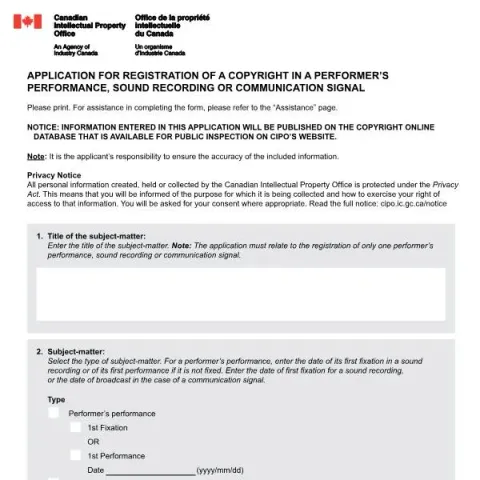
1. Title of the Subject-Matter
Begin by entering the title of the work—be it a performance, sound recording, or communication signal. Remember, each application must relate to only one work. The title should be clear and specific to avoid confusion.
2. Subject-Matter Details
Select the type of work you are registering and provide relevant dates:
- Performer’s Performance: Date of first performance or first fixation in a sound recording.
- Sound Recording: Date of first fixation.
- Communication Signal: Date of first broadcast.
Accurate dating is essential, as it establishes the timeline of your work’s creation and dissemination.
3. Owner Information
Provide the full name and address of the copyright owner. If there are multiple owners, attach a separate sheet listing all parties. This section confirms who holds the rights and ensures proper attribution.
4. Declaration
You must declare your relationship to the work—whether you are the owner, an assignee, or a licensee. This declaration affirms your legal standing to register the copyright.
5. Agent Details (if applicable)
If you are submitting the application through an agent or representative, include their contact information here. This section is optional but necessary if an agent is involved.
Fill in your form directly online
No printing: type your details into the boxes of the official form, tick, then download the PDF ready to send.
- 1Type into the form boxes
- 2Tick in one click
- 3Save and download the PDF
6. Payment of Fees
Registration requires the payment of a prescribed fee, which must be submitted concurrently with your application. Use CIPO’s Fee Payment Form, and do not send copies of your work with the application. For detailed fee information, refer to the Tariff of Fees on the CIPO website.
Points of Attention and Tips
When completing your application:
- Accuracy: Ensure all information is correct and complete. Inaccuracies can delay processing or impact your legal rights.
- Documentation: Attach additional sheets if you have multiple owners or additional details.
- Privacy: Be aware that personal information collected will be protected under the Privacy Act and used solely for the purpose of copyright registration.
- Submission: Address your correspondence to the Copyright Office at the provided address and retain proof of payment and submission.
By carefully preparing your application, you help secure your rights and contribute to the transparency of copyright ownership in Canada. For further assistance, consult the official resources or contact the Copyright Office directly.