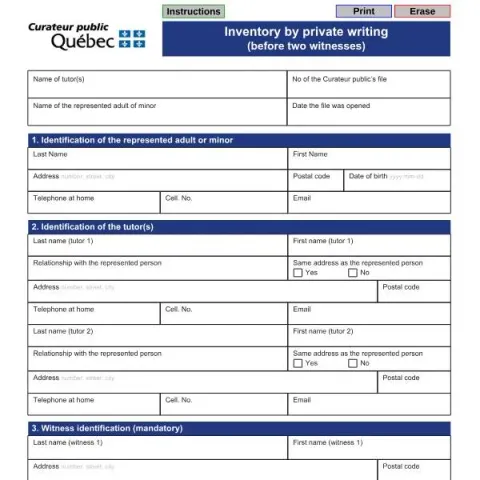
Understanding the "Inventory by Private Writing (Before Two Witnesses)" Form
If you are appointed as a tutor for an adult or minor under Canadian law, you may be required to complete the "Inventory by Private Writing (Before Two Witnesses)" form. This official document, issued by the Curateur public, serves to provide a detailed account of the assets and liabilities of the person under tutorship as of the date the file was opened. Proper completion of this form ensures transparency and legal compliance in managing the estate of the represented individual.
What Is the Purpose of This Form?
This form functions as an inventory report that documents all assets and debts of the represented adult or minor. It is a crucial step in establishing a clear financial picture, which helps prevent disputes and facilitates the management of the estate. The inventory must be made in writing, signed by the tutor(s), and witnessed by two individuals, ensuring the accuracy and integrity of the information provided.
Who Needs to Fill Out This Form?
- Legal tutors or guardians: appointed to manage the property of an adult or minor who is incapable of doing so themselves.
- Represented adults or minors: indirectly involved, as the tutor reports on their assets and liabilities.
It is essential that the person responsible for completing the form provides truthful and complete information to meet legal obligations and ensure proper management of the estate.
How to Complete the Inventory Form
Step 1: Fill in Personal Identification Details
Start by entering the full name, address, date of birth, contact information (telephone and email), and the case number of the Curateur public’s file. Accurate identification of the represented individual and the tutor(s) is vital.
Step 2: Document Assets (Patrimony)
List all assets as of the date the file was opened, including:
- Cash and petty cash
- Bank accounts with account numbers and bank details
- Investments and accounts receivable
- Mortgages receivable
- Buildings and land, with addresses and valuation details
- Prearranged funeral contracts (if applicable)
- Vehicles, life insurance policies, furniture, personal effects, and other assets
Ensure each asset is accurately described, with values specified and supporting documents attached if available.
Step 3: List Liabilities (Debts)
Record all liabilities, such as:
- Bank loans or lines of credit
- Mortgages payable
- Other debts or liabilities
Include the creditor’s name, address, and the amount owed. This comprehensive listing provides a clear picture of the financial obligations associated with the estate.
Fill in your form directly online
No printing: type your details into the boxes of the official form, tick, then download the PDF ready to send.
- 1Type into the form boxes
- 2Tick in one click
- 3Save and download the PDF
Step 4: Signatures and Witnesses
The form must be signed by the tutor(s) and witnessed by two individuals. Witnesses should provide their full names, addresses, and signatures. The signed inventory confirms that the information is complete and accurate to the best of the signatories’ knowledge.
Supporting Documents and Submission
While the form itself is primarily a written declaration, it is advisable to attach copies of relevant documents such as appraisals, titles, or contracts that support the asset values listed. Once completed, the form must be submitted to the Curateur public, following their specific procedures, which may include delivering a physical copy or submitting electronically if available.
Common Errors to Avoid
- Omitting assets or liabilities: Ensure all items are listed; incomplete inventories can lead to legal issues.
- Incorrect valuation: Use recent appraisals or municipal assessments where applicable.
- Missing signatures or witnesses: The form is invalid without signatures from the tutor(s) and two witnesses.
- Providing outdated or inaccurate contact information: Verify all details for effective communication.
Conclusion
Completing the "Inventory by Private Writing (Before Two Witnesses)" form is a vital step in fulfilling your responsibilities as a tutor under Canadian law. By accurately listing all assets and liabilities and ensuring proper signatures, you help safeguard the interests of the represented individual and comply with legal requirements. Always keep copies of the completed form and supporting documents for your records and future reference.