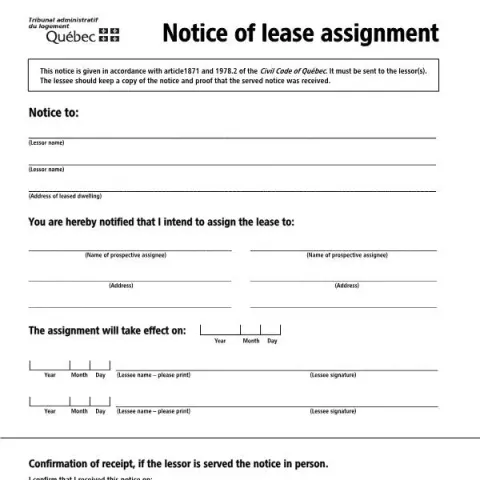
Understanding the Notice of Lease Assignment Form (TAL-802A-E)
The Notice of Lease Assignment form, identified by the code TAL-802A-E, is an official document issued by the Tribunal administratif du logement (TAL) in Quebec. It is used by tenants (lessees) to inform landlords (lessors) of their intention to transfer their lease to another person. This process is essential for ensuring transparency and legal compliance in lease transfers within Quebec’s housing framework.
Objective of the Form
The primary purpose of the TAL-802A-E form is to formalize the notice of a lease assignment from the tenant to the landlord. By completing this document, tenants notify landlords of their plan to transfer their lease rights to a prospective assignee, including details about the new occupant and the effective date of transfer. This process allows landlords to assess and respond to the proposed assignment in accordance with legal provisions.
Preparing Your Lease Assignment Notice
Before filling out the form, tenants should gather essential information:
- Names of the current lessee and prospective assignee
- Addresses of the leased dwelling and the assignee
- Intended date of lease transfer
Ensure that the information provided is accurate and complete. The form requires the lessee's signature and printed name, as well as the date of notice. If the landlord receives the notice in person, they are expected to confirm receipt by signing the designated section of the form.
Modalities of Submission
The TAL-802A-E form can typically be submitted in person or by mail to the landlord or property management. It is advisable to keep copies of the completed form and proof of delivery or receipt, such as a signed acknowledgment or postal receipt, to demonstrate compliance with legal obligations.
Landlord’s Response and Legal Implications
Upon receiving the notice, the landlord has 15 days to respond with their decision regarding the lease assignment. If the landlord refuses, they must specify the reasons for refusal in writing. If no response is provided within this period, the landlord is deemed to have consented to the assignment.
Refusals must be based on serious reasons, such as breach of lease conditions or other valid grounds, as outlined in Quebec’s Civil Code. If the landlord refuses for reasons other than serious grounds, the lease may be terminated on the date specified in the notice, effectively ending the tenancy for the current lessee.
Post-Assignment Procedures
Once the landlord consents or the refusal period lapses without response, the lease transfer proceeds. The new tenant (assignee) then assumes all obligations under the lease, and the original lessee is discharged from future responsibilities. It is recommended that both parties sign an assignment of lease agreement to clearly define their respective obligations, with templates available from the TAL website or local offices.
Important Legal Notes
According to the Civil Code of Quebec, certain restrictions apply:
Fill in your form directly online
No printing: type your details into the boxes of the official form, tick, then download the PDF ready to send.
- 1Type into the form boxes
- 2Tick in one click
- 3Save and download the PDF
- Leases of dwellings situated within educational institutions cannot be assigned.
- Leases in immovables recognized under specific government regulations may be assigned with the owner’s consent.
Additionally, landlords may only charge reimbursement for reasonable expenses related to the assignment process, and tenants cannot seek consideration for assigning their lease.
Additional Practical Advice
To facilitate a smooth process, landlords should send the prospective assignee a copy of their response—whether consent or refusal—promptly. Once an agreement is reached, both parties should formalize the transfer with a written assignment agreement, ensuring clarity on obligations and effective date.
For templates and further guidance, tenants and landlords can consult resources available on the Tribunal’s official website or contact their local TAL office.