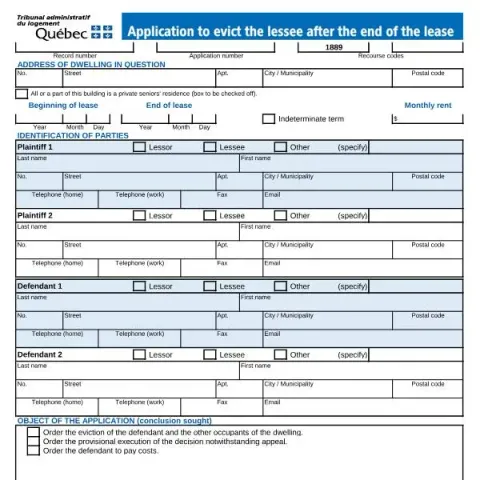
Understanding the Application to Evict a Lessee After the End of a Lease
If you are a landlord or property owner in Quebec and your lease has ended, but the tenant continues to occupy the dwelling, you may need to formally request eviction through the Tribunal administratif du logement. The official form for this process is the Application to Evict the Lessee After the End of the Lease, identified by the code TAL-005A-E. This article explains what this form is, who should fill it out, how to complete it correctly, and the key steps involved in submitting your application.
What Is the Purpose of this Form?
This application is used to request the Tribunal's authorization to evict a tenant who remains in the property after the lease has expired or after the date agreed upon by both parties. It is an official step in the legal eviction process, ensuring that the landlord's rights are protected and that the tenant vacates the premises lawfully. The form also allows you to specify whether you are seeking an order for costs, provisional execution, or other specific remedies.
Who Should Complete the Form?
The form is primarily intended for landlords or property owners who want to initiate eviction proceedings. It must be filled out by the party seeking the eviction, often referred to as the plaintiff. If there are multiple plaintiffs or defendants, the form provides space to include their details. It is essential that the applicant has all relevant information about the property, the lease, and the tenant(s) involved.
How to Fill Out the Application Form
1. Providing Property Details
Begin by accurately entering the address of the dwelling in question. Indicate whether part of the building is a private seniors' residence by checking the appropriate box. Ensure the address details—street number, street name, city, postal code—are correct and complete.
2. Identifying Parties Involved
Fill in the full names, addresses, and contact details of all parties involved, including the landlord (plaintiff) and the tenant(s) (defendants). You must specify whether each party is the lessee, lessor, or other, and provide their telephone numbers, email addresses, and postal codes.
3. Stating the Grounds for Eviction
Clearly specify that the dwelling is still occupied despite the lease ending or the agreed-upon date. Indicate the date by which the tenant was supposed to vacate. If applicable, detail any agreements reached or ongoing proceedings related to the case.
4. Detailing the Lease and Occupation
Include information on the original lease, such as the start and end dates, the monthly rent, and whether the lease was of fixed-term or indefinite duration. This helps the Tribunal understand the context of the dispute.
5. Requesting Specific Orders
Specify the type of order you are seeking: eviction, costs, provisional execution, or other remedies. You can also indicate if you wish to participate in a conciliation session, which is a voluntary process to resolve disputes amicably before the Tribunal makes a final decision.
Fill in your form directly online
No printing: type your details into the boxes of the official form, tick, then download the PDF ready to send.
- 1Type into the form boxes
- 2Tick in one click
- 3Save and download the PDF
Submitting the Application and Supporting Documents
Once completed, the form must be signed and filed with the Tribunal administratif du logement. It is essential to include all relevant exhibits, such as the lease agreement, notices served to the tenant, or any correspondence related to the case. The application can be notified to the tenant and other parties either in person, by mail, or through electronic means if agreed upon.
Common Mistakes to Avoid
- Incorrect or incomplete address details: Double-check all addresses and contact information.
- Missing signatures or exhibits: Ensure the form is signed and all supporting documents are attached.
- Filing the application too early: Confirm that the lease has indeed ended and the tenant has failed to vacate by the agreed date.
- Ignoring the option for conciliation: Consider participating in the free conciliation service to potentially resolve the dispute without a formal hearing.
Conclusion
The form TAL-005A-E is a crucial document for landlords seeking to enforce eviction after a lease ends. Proper completion and timely filing are essential to ensure your case proceeds smoothly through the Tribunal administratif du logement. If in doubt, consulting a legal professional or the Tribunal's resources can help clarify the process and improve your chances of a successful eviction.