Navigating the NAS2920: Understanding Your Beneficiary Designation
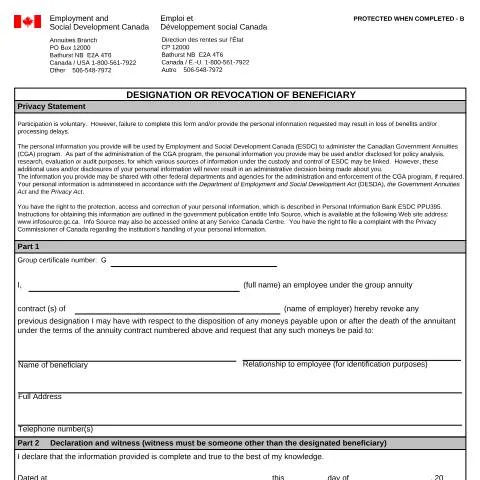
When it comes to planning your financial future, understanding the nuances of beneficiary designations can be critical. The Designation / Revocation of Beneficiary form, identified by code NAS2920, plays a pivotal role in the Canadian Government Annuities program. This guide will take you through important aspects of this document, its implications, and the steps you need to take to complete it effectively.
The Vital Role of the NAS2920 in Financial Planning
The NAS2920 is not just a piece of paperwork; it holds immense significance in your estate planning. When you designate a beneficiary, you are essentially deciding who will receive your annuity benefits after your passing. This form allows you to appoint one or more beneficiaries and to revoke any previous designations. Having a clear beneficiary designation can help ensure that your assets are distributed according to your wishes, thereby avoiding potential disputes among heirs and simplifying the claims process for your beneficiaries.
Who Needs to Consider the NAS2920 Form?
The NAS2920 form is relevant for a range of individuals, including:
- Active employees covered under a group annuity plan.
- Retirees who have vested annuity benefits.
- Former employees wishing to revise their beneficiary designations.
It's crucial to assess your personal situation. For instance, if you’ve recently undergone significant life changes—such as marriage, divorce, or the birth of a child—you may need to revisit your beneficiary designation.
Breaking Down the Form: Key Sections Explained
The NAS2920 form is structured to guide you in listing your details, your beneficiary's information, and other relevant declarations. Let’s examine each section closely:
Part 1: Identifying Information
In this section, you will need to fill out:
- Group Certificate Number: This is provided by your employer and links your annuity benefits to the specific group plan.
- Name of Employee: Your full name, as it appears in your employment records.
- Employer’s Name: This identifies the organization through which your annuity is administered.
- Previous Annuity Contract: If you are revoking a previous designation, specify the contract involved.
Part 2: Beneficiary Information
This is perhaps the most critical section of the form. Here, you will provide:
- Name of Beneficiary: The individual(s) you wish to receive the annuity benefits.
- Relationship to Employee: Clarifying this can help establish the legitimacy of the claim later on.
- Full Address and Telephone Number: Accurate contact information is essential to facilitate prompt notifications and benefit disbursements.
Be aware that any errors here could lead to complications when it’s time for your beneficiaries to claim the benefits.
Declaration and Witness Requirements
Completing this form requires you to declare that the information provided is accurate. You will also need a witness who is not named as a beneficiary. This adds a layer of legitimacy to the document and helps prevent any claims of fraud or misrepresentation.
Timing Is Everything: Important Deadlines and Updates
Once you have completed the NAS2920 form, consider the timing of its submission:
- Immediate Effect: Once submitted, the changes take effect almost immediately, unless otherwise stated.
- Regular Updates: It is advisable to review your beneficiary designation regularly, especially after major life events.
Missing the opportunity to update this form can lead to unintended distributions of your benefits, which may not align with your current wishes.
The Consequences of Inaction: Why You Shouldn't Delay
Failing to designate a beneficiary or neglecting to update an existing designation can result in significant complications:
- Your benefits may default to your estate, leading to a prolonged probate process.
- Potential disputes among family members over the distribution of benefits can arise.
- Tax implications could complicate the transfer of assets to your estate.
In essence, neglecting this small but vital document can have ripple effects on your loved ones' financial security after your passing.
Distinguishing the NAS2920 from Other Forms
It is vital to differentiate the NAS2920 from other similar forms related to government pensions and benefits, such as:
| Form | Purpose | Key Distinction |
|---|---|---|
| NAS2920 | Designation or revocation of beneficiary for annuity benefits | Specific to annuities under group plans |
| T1 General | Annual income tax return | Focuses on reporting income rather than beneficiary designations |
| ESDC’s Application for Benefits | Application for Employment Insurance or other social benefits | Involves application processes rather than designating beneficiaries |
Recommendations for Submitting the NAS2920
When finalizing and submitting your NAS2920 form, consider the following best practices:
- Double-check all entries: Ensure names and details are spelled correctly.
- Secure a reliable witness: Choose someone who understands the importance of this document.
- Keep a copy for your records: Always retain a personal copy of the completed form for future reference.
- Submit promptly: Don’t delay submitting the form; act as soon as possible to avoid complications.
Keeping Your Beneficiary Designation Current
Updating the NAS2920 should not be seen as a one-time task. Here are situations that would warrant an update:
- Life Events: Marriage, divorce, or the birth of a child.
- Changes in Relationships: Significant changes in your relationships with named beneficiaries.
- Financial Changes: Changes in your financial situation that may affect your planning.
Communicating openly with your beneficiaries about these designations can also foster understanding and reduce potential conflict in the future.
Fill in your form directly online
No printing: type your details into the boxes of the official form, tick, then download the PDF ready to send.
- 1Type into the form boxes
- 2Tick in one click
- 3Save and download the PDF
Final Thoughts: The Importance of Being Informed
The NAS2920 form may seem like just another administrative hurdle, but it’s a crucial component of your financial and estate planning. By understanding its purpose, implications, and the importance of timely updates, you can make informed decisions that align with your wishes and provide for your loved ones. Remember, taking these steps today ensures peace of mind for tomorrow.
Understanding Beneficiary Designation: Types and Considerations
When designating a beneficiary in Canada, it's essential to understand the different types of beneficiaries you can appoint and the implications of each choice. Beneficiary designations can be made for various accounts and assets, such as life insurance policies, retirement accounts, and investments. Generally, there are three main types of beneficiaries:
- Primary Beneficiaries: These are the individuals or entities who will receive the designated asset or benefit upon your passing. You may designate multiple primary beneficiaries, which allows you to divide the proceeds among your chosen individuals evenly or in specified proportions.
- Contingent Beneficiaries: If your primary beneficiaries predecease you or are otherwise unable to receive the benefits, contingent beneficiaries will inherit the assets. It's prudent to designate contingent beneficiaries to ensure your assets are distributed according to your wishes, regardless of unforeseen circumstances.
- Revocable vs. Irrevocable Beneficiaries: A revocable beneficiary designation allows you to change your beneficiary at any time without needing their consent. In contrast, an irrevocable beneficiary designation cannot be altered without the consent of the beneficiary. The choice between these two types can significantly affect your estate planning strategy, so consider your needs carefully.
When selecting beneficiaries, think about your relationships, the financial implications of your designations, and the potential tax consequences that may arise. A thorough understanding of these elements can help ensure your assets are distributed according to your intentions.
The Process of Revoking a Beneficiary: Steps to Follow
Revoking a beneficiary designation is a formal process that requires careful attention to detail. Whether you are making changes due to personal circumstances, such as divorce or the death of a beneficiary, or you simply wish to update your estate plan, follow these steps to ensure the revocation is valid:
- Review Your Existing Documents: Before making any changes, thoroughly review the documents that contain the beneficiary designations. This includes insurance policies, retirement accounts, and any relevant wills or trusts.
- Prepare a Written Revocation: Draft a written document stating your intention to revoke the existing beneficiary designation. Be clear and explicit about which designation is being revoked, and include your personal information, such as your Social Insurance Number (SIN), to avoid any ambiguities.
- Notify the Relevant Institutions: Once you have the revocation document prepared, you must send it to the institutions that hold the assets (e.g., insurance companies, banks, or investment firms). Some organizations may require specific forms or additional documentation, so be sure to check their requirements beforehand.
- Complete New Beneficiary Designations: After revoking a beneficiary, consider completing a new beneficiary designation form to appoint new beneficiaries as necessary. This ensures your assets are redirected according to your current wishes.
- Keep Copies for Your Records: Maintain copies of all documents related to the revocation and new designations in a secure location. This will be beneficial for your beneficiaries and your estate executor in the future.
By carefully following these steps, you can successfully revoke a beneficiary designation and have peace of mind knowing that your estate plan reflects your current intentions.
Legal Implications of Beneficiary Changes: What You Need to Know
Making changes to your beneficiary designations can have significant legal implications. Understanding these implications is crucial to ensuring that your decisions are both valid and enforceable. Here are several legal considerations to keep in mind:
- Witness Requirements: Depending on the type of document you are completing to change your beneficiaries, you may need to have your signature witnessed. For instance, some trusts and will changes require two witnesses who are not beneficiaries. Check provincial or territorial regulations for specific requirements.
- Applicable Laws: Every province and territory in Canada has its own laws governing wills, trusts, and estate planning. Make sure to familiarize yourself with the local laws that apply to your situation, as they can influence how beneficiary designations are handled and enforced.
- Tax Implications: The designation of a beneficiary can have tax consequences for both you and the beneficiaries. For example, if a designated beneficiary receives a life insurance payout, that amount is typically non-taxable. However, other forms of assets may trigger capital gains taxes upon transfer. Consulting with a tax professional or estate planner can provide clarity on these matters.
- Legal Contestation: Beneficiary designations can sometimes lead to disputes among family members or other potential heirs. If a beneficiary designation is contested in court, the situation can become complicated. Keeping comprehensive records of your decisions and the reasons behind them can be crucial in defending your choices if needed.
In conclusion, understanding the legal implications of beneficiary changes is key to effective estate planning. By being proactive and informed, you can mitigate potential disputes and ensure that your wishes are honored after your passing.