Understanding the "Consent to Contact Insurer" Form for Employment Insurance Premium Reduction
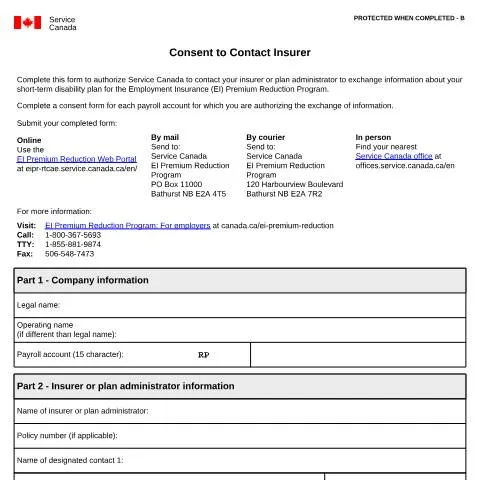
The "Consent to Contact Insurer" form is an official document issued by Service Canada, designed to facilitate the exchange of information between employers, insurance providers, and government authorities under the Employment Insurance (EI) Premium Reduction program. This program aims to support employers by reducing their EI premiums, provided they meet specific criteria and agree to certain information-sharing protocols. This article explains the purpose of the form, its scope, key provisions, and what it means for employers and insurers involved in the process.
Purpose and Scope of the Form
The primary objective of this form is to authorize Service Canada to contact an employer’s insurer or plan administrator to verify details related to short-term disability plans. When an employer participates in the EI Premium Reduction program, they must provide consent for Service Canada to exchange relevant information with their insurer. This ensures transparency and compliance with program requirements, allowing the government to confirm that the employer’s disability plan aligns with the program’s eligibility criteria.
This form is applicable to employers who have enrolled in the EI Premium Reduction program and are working with an insurer or plan administrator to manage their short-term disability benefits. It is a mandatory step to ensure that the information provided to Service Canada is accurate and up-to-date, thereby avoiding potential issues with premium reductions or compliance.
Main Dispositions and Key Provisions
Information Collection and Sharing
- The form collects detailed information about the employer, including legal name, operating name (if different), and payroll account number.
- It also gathers insurer or plan administrator details, such as the name, policy number, and designated contacts with their phone numbers and extensions.
- Once signed, the form authorizes Service Canada to communicate with these contacts to exchange information related to the employer’s short-term disability plan.
Authorization and Signatures
To be valid, the form must be signed by an authorized employer contact or a signed Part 7 of the application form. The signer confirms understanding of the obligations, including notifying Service Canada of any changes to the designated contacts and the need to inform them if they no longer wish to authorize contact.
Legal and Privacy Considerations
- The form emphasizes that personal and business information is collected under the authority of the Employment Insurance Act and the Department of Employment and Social Development Act.
- It highlights that data will be managed in accordance with the Privacy Act and other applicable laws, and may be shared with related government agencies for program administration.
- Participants are informed that providing personal information is voluntary but necessary for continued participation in the EI Premium Reduction program. Refusal to provide or update information may result in loss of benefits.
Implications for Employers and Insurers
By signing this consent form, employers agree to facilitate the verification of their disability plans through direct contact with their insurer or plan administrator. This process helps ensure that the employer’s disability coverage complies with the program’s eligibility standards, thereby enabling them to benefit from reduced EI premiums.
It is important for employers to keep their insurer or plan administrator contact details current. Any changes to designated contacts must be communicated promptly to Service Canada to maintain the validity of the consent and avoid disruptions in the premium reduction benefits.
Conclusion: What Does This Mean for You?
If your organization participates in the EI Premium Reduction program, understanding and completing this consent form is crucial. It ensures transparency and compliance, enabling Service Canada to verify your disability plan details effectively. This process ultimately supports your efforts to reduce employment insurance costs while maintaining adherence to legal and program requirements. Remember, providing accurate information and timely updates helps safeguard your benefits and ensures smooth administration of the program.