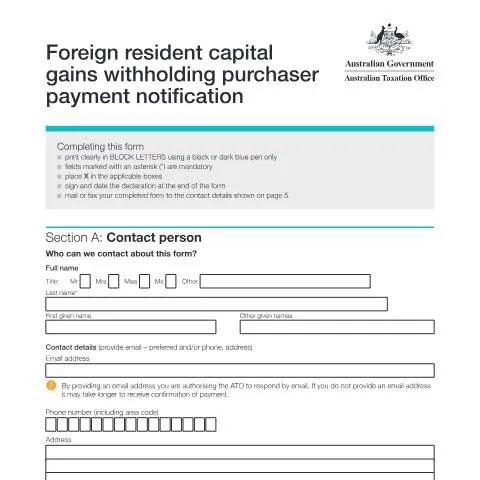
Understanding the Importance of NAT 74884 in Capital Gains Tax Compliance
When dealing with property transactions in Australia, particularly those involving non-resident sellers, it is crucial to navigate the complexities of capital gains tax (CGT) obligations. One essential document in this process is the Foreign Resident Capital Gains Withholding Purchaser Payment Notification, referenced as NAT 74884, issued by the Australian Taxation Office (ATO). This form plays a pivotal role in ensuring compliance with taxation laws that affect foreign residents selling Australian property.
The Legislative Framework: Why NAT 74884 Exists
To fully comprehend the importance of the NAT 74884 form, it’s essential to delve into the legislative backdrop that necessitated its creation. The requirement for this form stems from the Foreign Resident Capital Gains Withholding Tax provisions aimed at preventing tax avoidance by foreign residents. Under these measures, purchasers of certain properties must withhold a percentage of the purchase price when the seller is a foreign resident.
The introduction of this withholding obligation was formalised in 2016, significantly altering the landscape for property transactions involving non-resident vendors. The rationale is simple: it ensures that the ATO can collect tax from foreign sellers who might otherwise evade their CGT liabilities.
Who Must Submit NAT 74884?
NAT 74884 must be submitted by the purchaser in specific scenarios. The form is applicable when the seller of the property is a foreign resident and the property is subject to capital gains tax withholding. This includes:
- Residential properties sold for $750,000 or more.
- Commercial properties sold for any amount.
- Properties that fall under specific exceptions as defined by the ATO.
Timelines: Key Dates and Procedures
Understanding the timeline for submitting the NAT 74884 is vital for compliance. The timeline can be divided into key phases:
Pre-Transaction Phase
Before the property transaction is finalised, it’s imperative that both parties are aware of the need for the NAT 74884 form. Typically, this involves a discussion between the purchaser and vendor about the vendor’s residency status.
Post-Transaction Submission
Once the sale is completed, the purchaser is responsible for submitting NAT 74884 to the ATO. This must occur within a designated time frame, usually coinciding with the payment of the withholding amount to the ATO. The ATO will provide guidelines on the exact dates which typically align with the end of the financial year.
Failure to submit the form on time can lead to penalties, making adherence to these timelines critical.
How to Navigate the Form: Essential Completion Guidelines
Completing the NAT 74884 can seem daunting at first, but with the right information, it becomes manageable. Below are the critical sections of the form to focus on:
Purchaser Details
The first part typically requires the purchaser’s details, including their contact information and Tax File Number (TFN). This information is essential for the ATO to track the withholding tax obligations accurately.
Vendor Details
Next, the form requires details about the vendor, including their residency status and contact information. It’s crucial to confirm the vendor’s residency to determine whether the withholding applies.
Property Information
Details about the property being sold, including its address and sale price, must be accurately filled in. This may involve consulting the sales contract to ensure that all information is precise.
Payment Details
Finally, the form requires information on the amounts being withheld from the purchase price, aligning with the ATO's current regulations regarding withholding tax. The purchaser must calculate this amount based on the agreed sale price and the specified withholding percentage.
Submission Methods: Online vs. Paper
With the increasing emphasis on digital transactions, the ATO offers several methods for submitting the NAT 74884. Understanding the differences can help streamline the process.
Online Submission through myGov
One of the most efficient methods is through the ATO's online services via myGov. This online submission allows for immediate processing and confirmation of receipt, which is beneficial for both parties involved in the transaction.
Paper Submission
While electronic submission is encouraged, some purchasers may prefer to fill out a paper form. In this case, the completed NAT 74884 should be mailed to the designated ATO address, with attention paid to ensure it is sent within the stipulated timelines.
The Role of NAT 74884 in the Broader Tax Landscape
The NAT 74884 form is not an isolated document; instead, it forms part of a larger web of tax compliance and reporting mechanisms. Engaging with this form signifies a commitment to fulfilling tax obligations and protecting against potential liabilities, especially for foreign residents.
Moreover, it aligns with other compliance measures that the ATO mandates for property transactions, such as the requirement for the vendor to obtain a clearance certificate in certain cases. Thus, being diligent with NAT 74884 not only ensures legal compliance but also contributes to the overall health of the tax system.
Relation to Other Forms and Certificates
It’s important to differentiate the NAT 74884 from other similar forms that may confuse purchasers. For instance, the clearance certificate obtained by the vendor is distinct from the purchaser notification. Understanding these distinctions allows both parties to navigate their respective obligations more effectively.
Post-Submission: Monitoring the Process and Follow-Up
Once the NAT 74884 has been submitted, both the purchaser and vendor should monitor the situation closely. Tracking the processing status can be crucial, especially when dealing with significant financial transactions.
Checking Submission Status
The ATO provides several channels to check the status of a submission. Purchasers can access their myGov account to verify whether their form has been processed or if further action is required.
Handling Issues or Queries
If any complications arise, such as discrepancies in the information provided or requests for additional documentation, it's essential to address these swiftly. The ATO has support services available for guidance, and timely communication can often resolve issues before they escalate.
Conclusion: The Integral Role of NAT 74884 in Property Transactions
In summary, the Foreign Resident Capital Gains Withholding Purchaser Payment Notification (NAT 74884) is not just a formality but a critical instrument for ensuring compliance with Australian tax law. For purchasers involved in transactions with foreign resident vendors, navigating this process effectively is essential to avoid penalties and ensure a smooth transaction. By understanding its purpose, timely submission, and how it fits into the larger tax compliance framework, both parties can engage in property transactions confidently and responsibly.
Understanding the Foreign Resident Capital Gains Withholding Regime
The Foreign Resident Capital Gains Withholding (FRCGW) regime is designed to ensure that foreign residents pay tax on the capital gains made from the sale of certain Australian assets. This responsibility falls primarily on the purchasers of the assets, who are required to withhold a portion of the purchase price and remit it to the Australian Taxation Office (ATO). Understanding the nuances of this regime is essential for both buyers and sellers in the real estate market.
Under the FRCGW provisions, if a foreign resident seller disposes of a direct or indirect interest in Australian real property valued at $750,000 or more, the purchaser must withhold 12.5% of the purchase price unless specific exclusions or variations apply. This mechanism serves both as a compliance tool and a means to safeguard the Australian revenue base as foreign ownership of local assets increases.
It's critical to determine whether the seller qualifies as a foreign resident for tax purposes. This evaluation is typically made based on residency status, which can be complex and may involve factors such as the individual’s location, duration of stay in Australia, and existing tax obligations. If the seller is determined to be a resident for tax purposes, the FRCGW does not apply.
The obligations under the FRCGW mechanism require awareness of various exceptions. For example, if a foreign resident seller can provide a Foreign Resident Capital Gains Withholding Clearance Certificate (often referred to as a 'clearance certificate') from the ATO, the purchaser is not required to withhold any amount. This certificate can be applied for using the ATO’s online services, and it assures that the seller is compliant with their tax obligations and meets the necessary criteria. Such certificates are crucial for facilitating smoother transactions and ensuring compliance with the law.
Implications for Purchasers: What You Need to Know
For purchasers, the FRCGW regime imposes an important responsibility that can impact the financial aspects of a property transaction. It is essential for buyers to familiarize themselves with the withholding rules to avoid unexpected issues and potential penalties. The withholding amount itself is based on the purchase price, meaning that buyers must prepare financially for this upfront cost, which is remitted to the ATO on behalf of the seller.
In practical terms, purchasers should take proactive steps to ensure compliance with the FRCGW regulations. This may involve seeking professional tax advice, especially when dealing with high-value transactions that cross the withholding threshold. Furthermore, it’s beneficial for buyers to maintain open communication with the sellers to confirm residency status and inquire about any clearance certificates that might exempt them from the withholding requirement.
Additionally, purchasers must be aware of the procedural steps involved in remitting the withheld amount to the ATO. This involves completing the appropriate forms and ensuring that the payment is made within the specified timeframe—generally, this is within 21 days of the settlement date. Delays or failures to remit the withheld amount can lead to penalties and interest charges, which can add unnecessary costs to the transaction.
Another important consideration for buyers is the potential for claiming a credit for the amount withheld if the seller is a foreign resident. This is particularly relevant if subsequent assessments establish that no capital gains tax was ultimately payable by the seller upon the sale of the property. Buyers should keep detailed records of the withholding payments made, as these may be necessary for future tax filings or disputes.
Exemptions and Special Cases in the FRCGW Framework
The FRCGW regime includes several exemptions and special cases that can impact both sellers and purchasers. Understanding these can help both parties navigate the complexities of the withholding requirements effectively. Some key exemptions include property sales valued under $750,000, which do not trigger the withholding obligation. Additionally, certain types of properties, such as those sold by deceased estates or in the context of a divorce settlement, may also qualify for exemptions depending on the specific circumstances.
Furthermore, specific entities such as Australian residents, public entities, and certain trusts may not be subject to the FRCGW withholding requirements, provided they meet the criteria outlined by the ATO. This can help reduce the compliance burden for some transactions, although sellers must ensure that they provide the appropriate documentation to substantiate their residency status.
In cases where a seller is a foreign resident but establishes that they are not liable for capital gains tax due to specific exemptions (such as the main residence exemption or capital gains tax discounts), they may still need to apply for a clearance certificate to inform the purchaser about their tax status. This can help clarify the obligations under the FRCGW regime and facilitate smoother transactions.
Another noteworthy aspect of the FRCGW framework is the treatment of joint tenants or tenants in common, where the ownership structure may involve foreign and Australian residents. The withholding obligations can differ based on the residency status of the individuals involved, highlighting the need for careful consideration of ownership arrangements before entering into a sale.
In summary, while the FRCGW regime imposes significant responsibilities on purchasers, it also offers various avenues for exemptions and special considerations that can facilitate smooth transactions. Additionally, understanding the nuances of these exemptions can be invaluable for sellers looking to navigate the complexities of capital gains tax liabilities effectively.