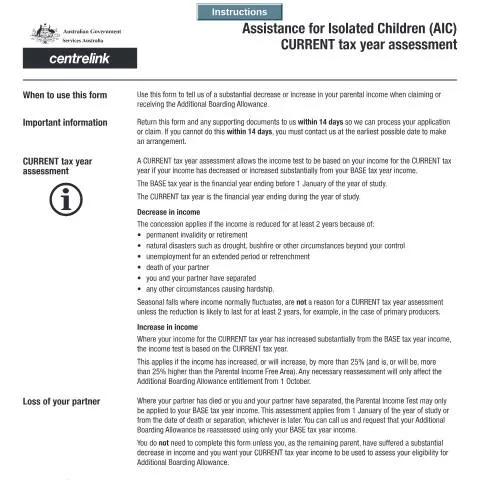
Navigating the Assistance for Isolated Children Form: A Comprehensive Guide
The Assistance for Isolated Children (AIC) program provides critical financial support to families with children who attend school away from their home due to geographical isolation. As the Australian landscape is vast and varied, many families find themselves in situations where accessing education services requires significant travel. Within this context, the SY042 form, officially titled "Assistance for Isolated Children - Current Tax Year Assessment," emerges as an essential tool for families seeking this support. This guide delves into the intricacies of the SY042 form, exploring its significance, application process, and what applicants can expect at every stage.
Understanding Your Eligibility: Who Should Consider the SY042 Form?
Before engaging with the SY042 form, it’s crucial to ascertain whether your family qualifies for assistance under the AIC program. Eligibility is determined by a set of criteria focused on the child's schooling and the family's location.
Key Eligibility Criteria
- Geographic Isolation: The child must reside in an area where access to suitable schooling is limited due to distance.
- School Attendance: The child should be enrolled in an eligible educational institution, which can include primary or secondary schools.
- Residency Requirements: Families must provide evidence of their residency status, which may include documentation confirming their address and living situation.
Specific Situations
There are scenarios that may require additional consideration. For instance, families who have recently relocated or those whose children have special educational needs should be prepared to articulate how these factors influence their circumstances. It’s advisable to gather supplementary information that can validate your claims regarding geographic isolation or educational challenges.
The Timeline: Key Dates for Application and Processing
Understanding the timeline of the SY042 form is integral to managing your expectations and ensuring compliance with the AIC application process. The application is typically linked to the financial year in Australia, which runs from July 1 to June 30.
Application Period
Families should aim to submit their form as soon as possible after the start of the financial year. Early submissions can expedite the assessment process, allowing you to receive necessary funds promptly.
Assessment and Decision Timeline
- Submission: Once the SY042 form is submitted, Services Australia will acknowledge receipt.
- Review Process: The assessment process usually takes several weeks. During this time, Services Australia may reach out for additional information or clarification.
- Decision Notification: Applicants will receive written notification of the outcome. If approved, families can expect funds to commence shortly thereafter.
Completing the SY042 Form: A Step-by-Step Breakdown
The fluidity of the online form submission through myGov simplifies the process, though it still requires careful attention to detail. Here’s how to navigate the SY042 form effectively.
Gather Required Information
Before starting the form, ensure you have the following at hand:
- Your Tax File Number (TFN)
- Your child’s school details, including their address and the distance from your home
- Proof of residency documentation
Filling Out the Form
When completing the SY042 form online, you will encounter several sections requiring specific details:
- Personal Information: Enter accurate information regarding you and your child.
- Education Details: Confirm the school your child attends and provide supporting evidence of distance and isolation.
- Financial Information: You may be asked to disclose your household income and any other relevant financial details.
Submitting Your Application
Once you have filled in all necessary sections, review your answers for accuracy before submitting through your myGov account. It's advisable to save a copy of your completed form for your records.
Submission Channels: Online vs. Paper Forms
Families can choose between submitting the SY042 form online or via traditional mail, each channel carrying unique advantages and considerations.
Online Submission
- Efficiency: Submitting online through myGov can expedite the processing time.
- Instant Acknowledgment: You will receive immediate confirmation that your application has been submitted.
Paper Submission
- Accessibility: For families without internet access, completing a paper form is a viable option.
- Processing Time: Be aware that paper submissions may take longer to process as they require manual handling.
Anticipating Outcomes: What Happens After Submission?
Once your SY042 form has been submitted, you may wonder about the potential outcomes and the next steps to take.
Possible Decisions
- Approval: If your application is successful, you will receive written confirmation and an explanation of the financial support you are entitled to.
- Request for Further Information: In some cases, Services Australia may require additional documentation or clarification to process your application.
- Denial: If your application is denied, the notification will outline the reasons for this decision, along with information on your right to appeal.
Follow-Up Actions
If there are issues with your application or if you wish to dispute a decision, you have the right to request a review. This can be done through the Administrative Appeals Tribunal (AAT), which allows for a merits review of the decision made by Services Australia.
Preparing Justifications: What Documentation Supports Your Application?
Gathering relevant documentation plays a critical role in the success of your application. Below are types of documentation that could be beneficial depending on your circumstances.
Standard Documentation
- Proof of Residency: Utility bills, lease agreements, or government correspondence confirming your address.
- School Enrollment Confirmation: Letters from the school or official documentation confirming your child's enrollment.
Special Circumstances
Families facing unique challenges, such as single parenthood or children requiring special needs education, should prepare additional documentation to substantiate these claims:
- Medical Documentation: If applicable, include reports from healthcare professionals outlining special educational needs.
- Affidavits or Statements: Personal statements outlining your specific situation can provide context to your claims of isolation.
Distinguishing the SY042 from Other Forms: Understanding Its Unique Role
It's important to recognize how the SY042 form compares to other services provided by Services Australia, especially concerning educational support.
Similar Forms and Their Purposes
- Family Tax Benefit: This form relates to ongoing financial support for the care and upbringing of children but is distinct from the AIC, which targets those facing geographical barriers to education.
- Child Care Subsidy: This subsidy assists with childcare costs but does not address the specific needs of children in remote areas.
The Unique Context of the SY042 Form
The SY042 form is specifically tailored for families facing educational challenges due to geographical isolation, making it a unique pillar of support within the broader framework of family assistance programs.
Final Thoughts: Staying Proactive in Your Application Journey
Completing the SY042 form is a crucial step for many families seeking assistance for their isolated children's education. By preparing diligently and understanding the nuances of the application process, you can enhance your chances of a successful outcome.
As with any formal application, staying organized, informed, and proactive will serve you well. Familiarize yourself with the resources available through Services Australia, and don't hesitate to reach out for guidance or clarification when needed. Each step taken in the application process brings you closer to securing the support vital for your child's educational journey.