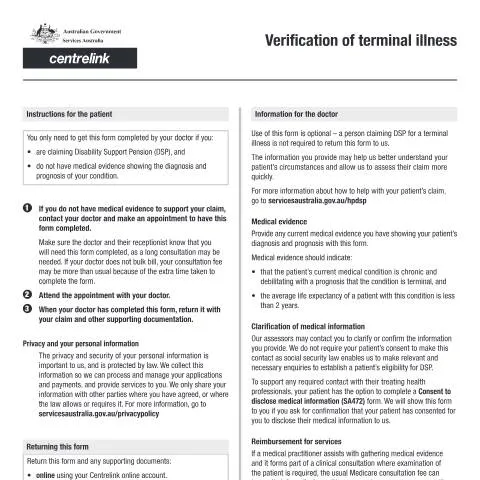
Navigating the Complexities of the Verification of Terminal Illness Form (SA495)
In the emotional and often overwhelming circumstances surrounding a terminal illness diagnosis, the process of obtaining assistance can be daunting. The Verification of Terminal Illness form (SA495) plays a critical role in facilitating access to support services for individuals diagnosed with a terminal condition. This document, issued by Services Australia, is not merely a formality but a gateway to crucial health and financial resources that can ease the burden during a difficult time.
Understanding the Unique Role of Form SA495
What sets the SA495 apart from other health-related documents is its specific focus on terminal illnesses. Unlike general medical certification forms, which may only require a general assessment of health, the SA495 demands detailed information about the patient's prognosis from a qualified healthcare professional. This specificity is essential, as it provides a legislated basis for access to various government supports, including potential financial aid and healthcare services tailored to meet the immediate needs of the patient.
Who Completes This Form?
The form must be completed by a registered medical practitioner or specialist with appropriate credentials. This includes doctors practicing in areas relevant to the patient's terminal condition. It's not something patients can fill out on their own; the physician must provide an assessment that meets the guidelines established by Services Australia, ensuring that the prognosis aligns with the criteria for terminal illness as defined in current legislation.
Key Differences with Other Forms
- Code SA495 vs. Other Medical Forms: Unlike other medical documentation that might address chronic conditions or disabilities, the SA495 specifically pertains to patients diagnosed with a terminal condition, where the prognosis suggests a life expectancy of less than 6 months.
- Verification Purpose: While forms like the Disability Support Pension application might require medical information, they do not necessitate the same level of specificity regarding terminal conditions. The SA495 is crucial in verifying an urgent need for support services.
Who Benefits from the Terminal Illness Support System?
The implications of completing the SA495 extend beyond the individual patient. Families, carers, and dependents can also benefit from the support that follows the verification process. Understanding the demographic profile of those who engage with this form helps clarify its significance.
Patient Profiles
| Profile Type | Description |
|---|---|
| Adults | Typically aged 18 and over, diagnosed with terminal cancer or other severe illnesses. |
| Minors | Children diagnosed with terminal conditions; the process requires parental or guardian involvement. |
| International Students | Foreign nationals residing temporarily in Australia facing terminal illnesses; must navigate additional visa considerations. |
| Indigenous Australians | Individuals from Aboriginal or Torres Strait Islander backgrounds; culturally sensitive approaches may be needed. |
Steps to Complete the SA495: A Detailed Guide
Completing the SA495 is an essential step in accessing support services. While each situation is unique, understanding the general process can help streamline the experience. Here’s how to navigate the requirements:
1. Gather Required Information
Before filling out the form, it is vital to collect necessary medical documentation, including:
- Recent medical reports and test results that establish a diagnosis.
- Notes from consultations that detail the prognosis and expected life expectancy.
- Any relevant treatment history that supports the diagnosis of terminal illness.
2. Consultation with a Registered Practitioner
The healthcare provider must be registered and may need to have experience in the relevant medical field. During the consultation, the practitioner will assess the patient's condition and complete the necessary sections of the SA495, ensuring that all criteria for terminal illness are met.
3. Completing the Form
Once the healthcare professional has all the required information, they will need to fill out the SA495 with precision. Key sections include:
- Patient Information: Basic details such as name, date of birth, and address.
- Medical Practitioner Details: Including registration details, specialty, and contact information.
- Diagnosis and Prognosis: A clear statement of the terminal condition and the estimated life expectancy.
4. Submission Channels: Where to Send the Form
Once completed, the SA495 can be submitted through various channels. Understanding each option's nuances helps in choosing the most efficient route:
- Online Submission: The preferred method via myGov, ensuring immediate processing and tracking.
- Mail Submission: If submitting a paper form, it is necessary to ensure it is sent to the correct Services Australia location to avoid delays.
- In-Person Submission: For those who prefer face-to-face interaction, visiting a local Services Australia office can provide immediate feedback and assistance.
Preparing for the Aftermath: Anticipating Outcomes
Once the SA495 is submitted, individuals may wonder what to expect next. Services Australia will review the documentation to ensure that all guidelines are met before approving any claims linked to the terminal illness.
Processing Timeline
The processing period can vary significantly based on individual circumstances and the volume of claims being handled by Services Australia. Generally, applicants can expect to receive a notification regarding their application status within a few weeks. It is advisable to allow adequate time for processing before following up.
Monitoring the Application Status
For those who submit the SA495 online, tracking the application is relatively straightforward through the myGov portal. If the form was submitted via mail or in person, keeping a record of submission is crucial for follow-ups.
The Importance of Follow-Up: Ensuring Support Continues
Should there be any issues or requests for additional information from Services Australia, being proactive is key. Here are steps to take:
1. Responding to Requests
Occasionally, Services Australia may require further documentation or clarification on the submitted form. Responding promptly can help avoid delays in accessing necessary services.
2. Contacting Services Australia
If clarity is needed on the status of the application or the next steps, contacting Services Australia directly can provide insight and guidance. Keeping records of all correspondence will be beneficial.
Final Thoughts: Making the Most of Available Resources
Completing the Verification of Terminal Illness form (SA495) is an essential step for individuals and their families seeking support during incredibly challenging times. Understanding the intricacies of this document and following the correct procedures can significantly ease the stress associated with navigating health and financial assistance. Staying informed, organized, and proactive can make a considerable difference in ensuring that necessary support is accessed promptly.
Understanding the Verification of Terminal Illness Form (SA495)
The Verification of Terminal Illness form, commonly referred to as SA495, plays a crucial role in the Australian welfare system, particularly for individuals seeking access to financial support in the face of terminal illness. This form is primarily utilized to apply for early access to superannuation benefits, as well as for accessing certain Centrelink payments, such as the Special Benefit or Disability Support Pension. Understanding the process, requirements, and nuances involved in the SA495 form is essential for anyone navigating this sensitive area.
The SA495 form is designed to confirm that an individual has been diagnosed with a terminal illness, typically one that is likely to result in death within 24 months. To initiate this process, you must obtain a medical practitioner’s statement confirming your diagnosis, which is a critical element of the application. The statement must be filled out by a treating medical professional who is familiar with your condition. It’s worth noting that this can include doctors or specialists, but they must be registered with the Medical Board of Australia.
Once the medical statement is completed, the SA495 form must be submitted along with your identification documents and any additional information required by Services Australia. Ensuring that your documentation is comprehensive and complete can significantly reduce processing time and streamline the entire application process.
Eligibility Criteria for the SA495 Form
When considering the SA495 form, it’s imperative to understand the eligibility criteria that must be met to successfully apply for benefits associated with terminal illness. While the overarching requirement revolves around a terminal diagnosis, specific conditions and stipulations must be adhered to, which can vary based on your circumstances.
First and foremost, applicants must be able to provide proof of their terminal illness, which typically necessitates a diagnosis from a qualified medical professional. It is beneficial to have an established relationship with your healthcare provider, as they will be the ones completing the verification section of the form. Keep in mind that the severity of the illness, prognosis, and treatment options may also be factors in determining eligibility.
Furthermore, it's essential to be aware of any existing Centrelink payments you may already be receiving. If you are currently on a different payment or are undergoing an appeal process, this could affect your eligibility for the SA495 form. Therefore, reviewing your payment status and ensuring that all paperwork is in order can prevent potential delays or complications.
Additionally, if you are over 60 years of age, there may be variations in the qualification criteria, which could be beneficial if you have worked for a substantial period and have contributed to superannuation funds. Different states may have some variations regarding access to benefits, so it's prudent to check with your local Centrelink office or through their official website for specific guidance tailored to your situation.
Document Preparation and Submission Process
The preparation of your SA495 form and accompanying documentation is a vital part of the application process. Proper documentation not only substantiates your claim but can also expedite the review. Here’s a detailed guide to ensure you are fully prepared:
1. Gather Required Documentation: In addition to the completed SA495 form, you will need to collect various pieces of documentation. This includes proof of identity, such as a passport or driver’s license, and any previous medical records that may support your current diagnosis. Having these documents readily available will help present a strong case.
2. Complete the SA495 Form Accurately: Ensure all sections of the SA495 form are filled out accurately and thoroughly. This includes personal details, information about your illness, and any related financial information. Incomplete forms can lead to processing delays.
3. Obtain Medical Verification: The medical practitioner’s statement is a pivotal component of your application. This must be filled out with precision, detailing your condition and prognosis. Any discrepancies in this documentation can lead to complications in the review process.
4. Submit Your Application: The SA495 form can be submitted online through myGov, which offers a secure and efficient way to manage your application. If you prefer a paper submission, you can send it directly to your nearest Services Australia office. Ensure you keep copies of all documents submitted for your records.
5. Follow Up: After submission, it’s advisable to follow up with Services Australia if you do not receive confirmation of your application status within a reasonable timeframe. This can be done through your myGov account or directly via phone with Centrelink.
By adhering to these steps, you will enhance your chances of a smoother application process, ensuring that you receive the necessary support during what can be a challenging time.