Navigating the PBS Safety Net Claim for Payment: A Practical Guide
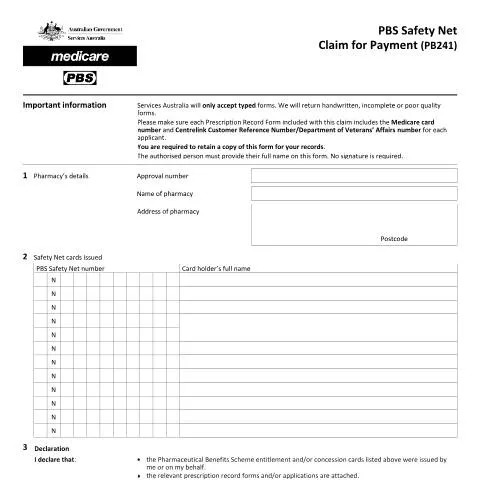
In the complex world of Australian healthcare, understanding the intricacies of your entitlements can be a daunting task. Among the myriad of forms and requirements, the PBS Safety Net claim for payment form (PB241) stands out as a crucial component for health professionals seeking reimbursement for medications under the Pharmaceutical Benefits Scheme (PBS). This guide intends to illuminate the process of completing and submitting this form, ensuring you are well-equipped to manage your entitlements effectively.
Understanding the Role of the PB241 Form
The PB241 form is pivotal for health professionals who provide PBS-listed medications to patients. This form serves as your formal request to access benefits under the PBS Safety Net, which is designed to protect patients from excessive out-of-pocket costs for necessary medications. By leveraging this system, both patients and health professionals can ensure that medications are accessible and affordable.
To fully grasp the significance of the PB241 form, consider the following:
- Access to Safety Net Benefits: By filling out this form, you can claim reimbursement for medications once you or your patients hit the Safety Net threshold, reducing the financial burden.
- Documentation of Transactions: This form helps establish a record of interactions with PBS medications, which is vital for both audit and compliance purposes.
- Facilitating Timely Payments: Submitting this form correctly can expedite the payment process, ensuring that healthcare providers receive compensation promptly.
Essential Steps Before Completing the PB241
Prior to diving into the completion of the PB241 form, it's crucial to gather the necessary documentation and information. This preparation can significantly reduce the chances of errors and delays. Here's what you need to consider:
Gathering Supporting Documents
Depending on the specific circumstances surrounding your claim, you may need to prepare various documents:
- Patient Information: Full name, address, and Medicare number of the patients for whom you are claiming.
- Medication Details: Clear details of the medications dispensed, including the generic name, dosage, and PBS item codes.
- Proof of Safety Net Threshold: Documentation that proves the patient has reached the PBS Safety Net threshold, which might involve previous claim details.
Identifying Your Claim Type
Claims can differ based on various factors, such as the type of patient (e.g., concession card holders, general patients) or the nature of medication provided. Identifying the correct claim type is essential to ensure accurate processing. For instance, concession card holders may have different requirements compared to general patients.
Decoding the PB241 Form: Section by Section
With your documents ready, it's time to delve into the PB241 form itself. This section will break down each component of the form, highlighting important aspects and potential pitfalls.
| Section | Description | Common Errors |
|---|---|---|
| Personal Details | Include the patient's information accurately. | Incorrect Medicare numbers or misspelled names can lead to claim rejections. |
| Medication Details | List all medications being claimed under the Safety Net. | Omitting medications or entering wrong PBS item codes can invalidate your claim. |
| Claim Type | Select the appropriate claim type based on the patient’s status. | Selecting the wrong claim type may cause payment delays or denials. |
| Signatures | Must be signed by the health professional submitting the claim. | Failing to sign could render the form invalid. |
Submitting Your PB241 Form: Options and Best Practices
Choosing the right method to submit your PB241 form can influence the speed and efficiency of the claims process. Here’s an overview of the available submission channels:
Online Submissions via myGov
Submitting your claim online through myGov is the preferred method due to its convenience and speed. Follow these steps:
- Log in to your myGov account.
- Navigate to the Services Australia section.
- Locate the PB241 form within the online claims section and follow the prompts to complete and submit your claim.
Paper Submissions
If you prefer traditional methods or encounter technical issues, you can submit your form via mail. Ensure you:
- Print and complete the form thoroughly.
- Attach all necessary supporting documentation.
- Mail to the designated address provided on the form, keeping a copy for your records.
After Submission: Understanding the Follow-Up Process
Once you have lodged your PB241 form, it's essential to monitor the progress of your claim. Here’s what typically happens next:
Processing Timeframes
The processing time for claims can vary depending on numerous factors, including the volume of claims being handled by Services Australia and the accuracy of the submitted information. While some claims may be processed swiftly, others, especially those with errors or requiring further documentation, may take longer. You might consider:
- Checking the status of your claim online via myGov.
- Contacting Services Australia directly for updates if you suspect significant delays.
What to Do if Your Claim is Rejected
In the unfortunate event that your claim is rejected, understanding your recourse is vital. You should:
- Review the Rejection Notice: Carefully read the reasons provided for the rejection.
- Gather Additional Information: If the rejection is due to missing information, compile what is needed for re-submission.
- Submit a Request for Review: If you believe the rejection was unwarranted, you have the right to request a review.
Key Considerations: Rights and Responsibilities
When interacting with the PBS Safety Net and the claim process, being aware of your rights and responsibilities can facilitate a smoother experience. Here are several key points:
- Right to Timely Payments: As a health professional, you are entitled to prompt reimbursement for valid claims.
- Obligation to Provide Accurate Information: Ensuring that all details submitted are correct and up-to-date is essential to avoid delays or penalties.
- Responsibility to Maintain Records: Keeping thorough records of claims and supporting documentation is crucial for potential audits.
Anticipating Changes and Future Considerations
As healthcare policies and procedures evolve, staying informed about changes affecting the PBS Safety Net is important. Consider subscribing to updates from Services Australia or participating in professional forums to remain engaged with the latest developments that could impact your practice.
With a greater understanding of the PB241 form and the procedural landscape, health professionals can navigate the PBS Safety Net with confidence, ensuring that they maximize their entitlements while fulfilling their obligations. This proactive approach not only benefits practitioners but ultimately enhances patient care by maintaining accessibility to necessary medications.
Understanding Eligibility for PBS Safety Net Claims
Before submitting the PBS Safety Net claim for payment form (PB241), it's essential to understand the eligibility requirements for this program. The PBS Safety Net is designed to provide financial relief for individuals who have high out-of-pocket costs for prescription medicines. To qualify for this scheme, you must be a resident of Australia, enrolled in Medicare, and have incurred costs for medications listed under the Pharmaceutical Benefits Scheme (PBS).
There are specific thresholds that must be met to benefit from the Safety Net. For example, as of the current financial year, individuals must reach a total of $1,558.10 in out-of-pocket costs for PBS medications. For families, the threshold is higher, allowing combined expenses to count towards the total. It's important to keep an accurate record of all prescription medications purchased to ensure that you can substantiate your claim. Receipts should be retained and organised, as they will be requested when you complete the PB241 form.
Individuals should also consider whether they are eligible for any exemptions from the Safety Net threshold. For instance, holders of a Department of Veterans' Affairs (DVA) Gold Card or a DVA White Card for specific conditions may not need to reach the threshold, thus allowing them immediate access to the Safety Net benefits.
Filling Out the PBS Safety Net Claim Form (PB241)
The PB241 form is designed to be straightforward, but understanding its components is crucial for a successful claim. The form is divided into several sections that require specific information. The first section solicits your personal details, including your name, address, and Medicare number. Ensure that this information matches what is registered with Medicare, as discrepancies can cause delays in processing your claim.
Next, you'll need to provide details about the prescriptions that count towards your Safety Net threshold. This includes the medication name, PBS item number, prescription date, and the cost incurred. It's advisable to double-check that all the entries are accurate and complete. Missing information or errors can lead to rejection or lengthy processing times.
Additionally, be prepared to submit supporting documentation. This may include original receipts for your medications and any relevant correspondence with healthcare providers. You can submit your PB241 form either online through myGov or by mailing a hard copy to the relevant processing centre. If you choose to mail your claim, consider using a reliable postal service to ensure it reaches the right destination.
The Impact of PBS Safety Net on Health Costs
The PBS Safety Net has a significant impact on managing health costs for Australians. By reducing the amount individuals must pay for necessary medicines, it alleviates the financial burden that can sometimes accompany chronic conditions or long-term medication needs. It is particularly beneficial for families with multiple members requiring various medications.
Statistical data shows that the Safety Net has effectively lowered the barriers to accessing essential medicines. For individuals struggling with health issues, this program enables them to adhere to their prescribed treatments without the constant worry about escalating costs. Moreover, the PBS Safety Net plays a crucial role in promoting public health by ensuring that individuals can afford their medications, thereby improving overall community health outcomes.
Furthermore, awareness of the PBS Safety Net and its benefits is vital. Many eligible individuals may not be fully informed about their entitlements, which can lead to underutilisation of this significant resource. Community awareness initiatives, such as informational sessions or outreach programs by healthcare providers, have proven effective in bridging this knowledge gap.
In conclusion, understanding and navigating the PBS Safety Net is critical for ensuring that Australians can effectively manage their medication costs. By knowing how to fill out the PB241 form accurately and comprehending the eligibility requirements, individuals can make the most of this valuable system designed to safeguard their health and financial well-being.