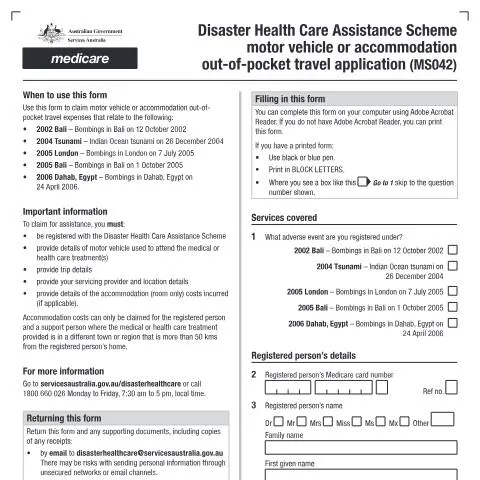
Navigating the Disaster Health Care Assistance Scheme Form (MS042)
The process of accessing support through the Disaster Health Care Assistance Scheme can often feel overwhelming, especially when circumstances demand quick action. For those who have incurred out-of-pocket expenses for motor vehicle or accommodation-related travel due to a disaster, the MS042 form becomes a vital tool in seeking financial relief. Understanding not just the form itself, but the context in which it is applied and the nuances of filling it out can significantly affect the outcome. This article provides a detailed walkthrough of the MS042, detailing who might need it, how to prepare for its submission, and how to navigate the post-submission process effectively.
Understanding Who Should Complete the MS042
Identifying whether you fall into the category of eligible applicants is crucial. Individuals impacted by a significant disaster, such as floods, fires, or other severe weather events, may be eligible to apply for assistance under this scheme. The nature of your expenses will guide whether the MS042 is suitable for your situation. Here are profiles of potential applicants:
- Individuals with Direct Impact: Those who have experienced personal injury or property damage may qualify for reimbursement of travel costs incurred while accessing health care services.
- Caregivers and Family Members: If you are a caregiver accompanying someone who has been directly affected by a disaster, you may also be eligible to claim travel expenses related to supporting your loved one.
- Minors: In cases where a minor is affected, a parent or legal guardian must submit the application on their behalf.
- Non-Residents: Temporary residents or international visitors affected by disasters may have special considerations and should check eligibility by consulting with Services Australia.
Essential Documentation: What You Need to Prepare
Before diving into the application, gathering the necessary documents is essential. The documentation required can vary based on individual circumstances, but some common elements typically include:
- Travel Receipts: Original receipts for travel-related expenses must be retained. This includes fuel costs, accommodation invoices, or public transport tickets.
- Proof of Disaster Impact: Documentation that verifies your situation during the disaster, such as news articles, government notices, or any relevant correspondence from emergency services.
- Medical Documentation: If applicable, include any medical records that justify travel for health care services. This may involve doctor’s notes or discharge summaries.
- Identification: A valid form of ID, such as a driver's license or passport, to establish your identity.
Completing the MS042: A Step-by-Step Approach
Filling out the MS042 form may seem daunting at first, but approaching it methodically can simplify the process. Here’s a structured outline to guide you:
- Personal Details: Begin with your full name, address, contact information, and Tax File Number (TFN). Ensure these details are accurate to avoid any processing delays.
- Disaster Details: Clearly state the nature of the disaster and how it affected you. Be specific about dates, locations, and the impact endured.
- Expense Breakdown: List each travel-related expense separately. Include dates, types of travel, and costs. Providing a clear summary helps in the assessment of your claim.
- Signature and Date: Don’t forget to sign the form and date it. An unsigned form may lead to automatic rejection.
Submission Channels for the MS042 Form
Once you've completed the MS042 form, the next step is submitting it. Services Australia offers multiple avenues for submission, each with its own advantages:
| Submission Method | Benefits | Considerations |
|---|---|---|
| Online via myGov | Fast processing, convenience of managing all records in one place. | Requires prior setup and familiarity with myGov. |
| Allows for physical copies to be submitted for those less comfortable with digital methods. | Longer processing times; ensure to send it with enough time to avoid delays. | |
| In-Person at Services Australia office | Immediate assistance from staff, ability to ask questions. | Possible wait times; limited by office hours. |
The Post-Submission Landscape: What to Expect
After submitting your MS042 form, understanding the post-submission phase is vital. Services Australia will review your application, a process that can take time depending on various factors:
- Processing Time: While exact timelines may vary, keeping an eye on your myGov account for updates can provide insights into the progress.
- Potential Additional Requests: Be prepared for possible follow-up requests for further documentation. Quick responses can help expedite your claim.
- Outcome Notifications: You will receive a notification regarding the outcome of your application. If approved, details on payment timelines will be included.
- Appeals Process: If your application is denied, you have the right to request a review of the decision. This entails completing the request for a review form and submitting it as per the instructions provided.
Considerations for Special Circumstances
Certain unique situations may require additional attention when submitting the MS042. Here are a few scenarios that might necessitate an alternative approach:
For Individuals Experiencing Financial Hardship
If your financial situation is dire as a result of a disaster, it may be worthwhile to explore other support services that could complement your application. Additional assistance through community organizations that offer support for those affected by disasters can be invaluable.
Minors and Legal Guardianship Issues
When submitting on behalf of a minor, ensure that you have the correct legal documentation to prove your guardianship. This will facilitate a smoother approval process and avoid any potential complications.
Non-Residents and Temporary Visa Holders
For non-residents applying under this scheme, it’s imperative to clarify your situation with Services Australia. Temporary visa holders may have specific conditions governing their eligibility for assistance, and it’s advisable to gather all pertinent visa documentation prior to submission.
Maintaining an Organized Record of Your Application
Throughout the application process, keeping a detailed record of your submission is essential. Consider creating a dedicated folder, whether physical or digital, that includes:
- Copy of the completed MS042 form
- Receipts and invoices
- Any correspondence from Services Australia
- Notes from any phone calls or in-person visits
This organized approach allows you to track your progress and provides a reference in case further action is needed.
Final Thoughts on the MS042 Journey
Engaging with the MS042 form as a part of the Disaster Health Care Assistance Scheme is indeed a critical step for those affected by disasters. While the process may appear complex, thorough preparation, an understanding of the various submission methods, and awareness of the post-submission landscape can pave the way to a successful application. By staying informed and organized, you can navigate this journey with confidence and access the support needed to overcome the challenges posed by disasters.
Understanding the Eligibility Criteria for the Disaster Health Care Assistance Scheme
To apply for the Disaster Health Care Assistance Scheme (DHCAS) for out-of-pocket travel expenses due to a disaster, it is crucial to understand the eligibility criteria set forth by Services Australia. This scheme is designed to assist individuals who have incurred additional costs due to displacement or medical emergencies during a disaster.
Who Can Apply?
Eligibility primarily hinges on the following factors:
- Disaster Events: The application must relate to a disaster that has been declared by the Australian Government, such as bushfires, floods, or other significant natural disasters.
- Medical Emergencies: Applicants must demonstrate that the travel or accommodation was necessary due to a medical emergency. This includes instances where individuals had to travel for urgent medical treatment that could not be received locally.
- Means Test: While there are no strict income limits for individuals applying for DHCAS, Services Australia may assess the financial burden and the necessity of assistance based on the applicant's circumstances.
- Residency Requirements: Applicants must be Australian citizens or permanent residents and live in a declared disaster area to qualify for assistance.
Documentation Needed
To smoothen the application process, ensure to gather the following documents:
- Proof of residency in a declared disaster area (e.g., utility bills or government correspondence).
- Medical documentation substantiating the need for travel or accommodation related to a medical emergency.
- Receipts and invoices for out-of-pocket expenses incurred during the disaster.
The DHCAS program aims to alleviate the financial strain faced by individuals in the aftermath of disasters and promotes recovery efforts by ensuring access to necessary healthcare services.
Step-by-Step Application Process for DHCAS
Navigating the application process for the Disaster Health Care Assistance Scheme can seem daunting, but understanding the step-by-step procedure can simplify your experience significantly. Here’s a comprehensive guide to securing financial assistance for medical-related travel or accommodation costs incurred due to a disaster.
Step 1: Gather Required Information
Before you initiate the application, ensure you have all necessary details at hand. This includes:
- Your Tax File Number (TFN) for identification purposes.
- Personal and contact information, including your address and phone number.
- Details of the disaster event, including dates and location.
- Specifics of the medical service received, including health provider's details.
Step 2: Access the myGov Portal
The primary platform for submitting your DHCAS application is the myGov portal. If you do not already have an account, you will need to create one. Follow these steps:
- Go to the myGov website.
- Click on 'Create an account' and follow the prompts.
- Link your account to Services Australia by entering your TFN and other requested personal information.
Step 3: Complete the DHCAS Application Form
Once logged into myGov and linked to Services Australia, you can access the DHCAS application form. Be meticulous while filling out the form; inaccuracies or incomplete sections may lead to delays. The application includes:
- Personal details section
- Information about the disaster event
- Details regarding the medical services accessed
- Documentation upload feature for required evidence
Step 4: Submit Your Application
After reviewing your application for accuracy, submit it through the myGov portal. You will receive a confirmation email that contains a summary of your application. Keep this email saved, as it serves as a reference.
Step 5: Await Outcome and Provide Additional Information if Requested
Services Australia may contact you for further information or clarification. Be prompt in your responses to avoid delays. The typical processing time can vary based on individual cases and the volume of applications received during peak disaster recovery periods.
Step 6: Receive Your Assistance Payment
Once your application has been processed, and if approved, you will receive your assistance payment via your nominated bank account. Ensure that your banking information is updated in your account settings on myGov.
This structured approach not only streamlines the application process but also increases your chances of receiving the necessary assistance quickly and efficiently.
Common Challenges and Solutions in Navigating the DHCAS Application
While the intent of the Disaster Health Care Assistance Scheme is to provide crucial financial support, applicants often face several challenges in the application process. Recognizing these issues and knowing how to address them can minimize stress and improve the likelihood of a successful claim.
Challenge 1: Incomplete Documentation
A frequent reason for application delays or denials is the submission of incomplete documentation. Individuals may overlook certain requirements or fail to include necessary evidence.
Solution: Create a checklist based on the documentation requirements outlined in the application guidelines. Double-check each item before submission. If possible, seek assistance from community organizations or local support services that specialize in disaster recovery to guide you in gathering the correct documents.
Challenge 2: Confusing Terminology in the Application
Some applicants may find the technical language used in the application form or guidelines challenging to understand, leading to errors or misunderstandings.
Solution: Take your time to read through the information provided carefully. If you have questions about specific terms or sections, don’t hesitate to contact Services Australia directly for clarification. You can also seek help from trusted family members, friends or community groups familiar with the process.
Challenge 3: Delays in Processing
Depending on the volume of applications received, processing times may be longer than expected, causing frustration for applicants who are in urgent need of assistance.
Solution: Patience is key, but keeping track of your application status via the myGov portal can alleviate anxiety. If you do not hear back within a reasonable timeframe, feel free to contact Services Australia to inquire about the status of your application. Keeping your contact information updated will ensure you receive any communications promptly.
Challenge 4: Changes in Personal Circumstances
During the application process, personal situations may change, such as relocation or changes in financial status that could impact eligibility.
Solution: Always communicate any significant changes to Services Australia as soon as they occur. Transparency is important; any changes could affect your application or assistance payment. Be prepared to provide updated documentation to reflect your current situation.
By being proactive about these challenges, applicants can navigate the DHCAS application process more smoothly, ensuring they receive the necessary financial support during difficult times.