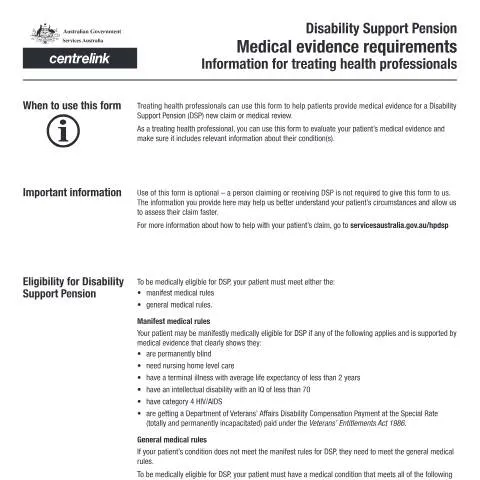
Understanding the Role of the SA478 Form in Disability Support Pension Applications
Navigating the complexities of the Disability Support Pension (DSP) application process often feels like traversing a maze. The SA478, or the Disability Support Pension Medical Evidence Checklist for treating health professionals form, is a crucial piece of this puzzle. This document streamlines the process of gathering medical evidence about a claimant’s eligibility for this vital support. Rather than simply filling out a form, treating health professionals play an active role in substantiating the claims of individuals seeking assistance due to a disability.
Decoding the SA478: Sections and Their Significance
The SA478 is structured to elicit comprehensive medical information that supports a claimant's request for the DSP. Each section of the form serves a distinct purpose and requires careful attention to detail.
Patient Identification and Details
- Full Name: Ensure the name matches official documents.
- Address: Current residential details facilitate communication.
- Date of Birth: Vital for verifying identity.
Incorrect or incomplete identification can lead to delays in processing. Verify all information thoroughly.
Medical History and Current Condition
This section delves into the patient’s medical background, including diagnoses and treatments. Health professionals must provide detailed descriptions of the patient's conditions, not just labels. For instance:
- Outline the nature of the disability.
- Include dates of diagnosis and relevant treatments.
- Discuss the impact of the disability on daily living activities.
A detailed and honest account can significantly influence the application outcome.
Functional Impact
Perhaps the most critical aspect of the SA478 is the section dedicated to the functional impact of the disability. Here, practitioners must document how the disability hinders the patient’s ability to carry out everyday tasks, such as:
| Activity | Impact Level | Supporting Evidence |
|---|---|---|
| Personal care | Severe | Requires assistance for bathing and dressing |
| Mobility | Moderate | Can walk short distances but fatigues quickly |
| Communication | Mild | Occasional difficulty in understanding |
This section requires careful documentation, as it directly correlates to the assessment of eligibility for the DSP. Misrepresentations, even unintentionally, can lead to complications.
Distinguishing the SA478 from Other Forms
While the SA478 is specifically designed for medical professionals to provide evidence regarding a disability, it is often confused with other forms that may seem similar. Understanding these distinctions is essential.
- SA478 vs. SA000: The SA000 form is used for general medical assessments but lacks the specific focus on functional impairments that the SA478 provides.
- SA478 vs. other evidence forms: Other forms may request information but do not emphasize the structured medical evidence needed for DSP applications.
Correctly identifying and utilizing the SA478 is crucial in presenting a strong case for disability support.
The Wider Context: How the SA478 Fits Into the DSP Application Process
The SA478 forms a cornerstone of the application process for the DSP but is just one component in a broader landscape of requirements. Claimants must also navigate various other steps, including:
- Completing the DSP claim form, which asks for personal details and financial circumstances.
- Providing additional documentation such as identification and financial records.
- Attending interviews or assessments as required by Services Australia.
The successful gathering of medical evidence through the SA478 can significantly enhance a claimant's chances of receiving timely support.
Preparation for the SA478: Key Considerations for Health Professionals
Health professionals play a pivotal role in the successful completion of the SA478. Their insights and observations can make a marked difference in the outcomes of disability applications. When preparing to complete the SA478, consider the following:
- Gather Comprehensive Medical Records: Collect relevant documentation that supports the patient’s claims.
- Engage with the Patient: Discuss their daily challenges to accurately reflect their situation.
- Be Thorough and Precise: Inconsistencies or vague language can jeopardize the application.
Effective communication and detail-oriented documentation can significantly streamline the process for claimants.
Legal Context and Historical Background of the SA478
The SA478 operates within a framework established by the Administrative Decisions (Judicial Review) Act 1977 (Cth). This regulatory backdrop ensures that individuals have the right to review decisions made by administrative bodies, including those pertaining to the DSP.
The evolution of the SA478 reflects changing societal attitudes towards disabilities and the importance of supporting individuals in need. Over the years, the form has undergone revisions to better capture the complexities of various disabilities and their impacts on daily functioning.
Next Steps After Completing the SA478
Upon completing the SA478, health professionals must ensure that it is submitted alongside the other required documents for the DSP claim. The next steps include:
- Submission: Ensure the form is submitted through the correct channels, which may include online submissions via myGov.
- Awaiting Assessment: After submission, the claim will be assessed by Services Australia.
- Possible Follow-ups: Be prepared for additional requests for information or clarification.
Timely and accurate submission can expedite the approval process, ensuring that individuals receive the support they need without unnecessary delays.
Understanding Disability Support Pension Eligibility Criteria
The Disability Support Pension (DSP) is designed to provide financial assistance to individuals with a permanent physical, intellectual, or psychiatric condition that prevents them from working. Understanding the eligibility criteria is crucial for both applicants and health professionals involved in the assessment process.
The primary eligibility criteria for the DSP include:
Age Requirement: Applicants must be at least 16 years old and under the age pension age.
Residency Status: You must be an Australian resident or hold a qualifying visa for at least 10 years, although exceptions may apply for specific circumstances.
Medical Condition: The applicant must have a permanent disability that significantly impedes their ability to work. This is where the Medical Evidence Checklist becomes essential, as it helps the treating health professional provide comprehensive documentation demonstrating the severity of the condition.
Work Capacity: Applicants must demonstrate that they have a limited capacity to work or are unable to engage in any work for at least 15 hours per week. This is usually assessed through the evidence provided by health professionals using the SA478 form.
Income and Assets Test: Beyond medical conditions, one must also pass an income and assets test. For single individuals, the income limit is $190 per fortnight, while for couples, it’s $360. Assets limits vary depending on your living situation and relationship status.
It’s essential to note that the criteria can change, so staying updated through Services Australia is crucial. A thorough understanding of these factors will help streamline the application process and ensure that the necessary evidence aligns with the DSP requirements.
The Role of Treating Health Professionals in the Application Process
Treating health professionals play a vital role in the Disability Support Pension application process. They are responsible for completing the Medical Evidence Checklist for treating health professionals, also known as the SA478 form. This form is pivotal, as it provides the Department of Social Services with the necessary medical evidence to assess the applicant’s claim effectively.
Responsibilities of Health Professionals
Comprehensive Assessment: Health professionals must conduct a thorough assessment of the applicant’s condition, documenting the degree to which it affects their daily living and work capacity. This includes evaluating the physical, psychological, and social aspects of the disability.
Detailed Medical Evidence: It is crucial to provide detailed medical reports that outline the diagnosis, treatment history, and functional limitations. The more comprehensive the information, the easier it is for the Department to understand the applicant’s needs.
Ongoing Treatment Documentation: Health professionals should include information about ongoing treatments, any prescribed medications, and the expected duration of the condition. This helps establish the permanence of the disability, which is a key eligibility criterion for the DSP.
Collaboration with Other Professionals: In many cases, an applicant may have multiple health issues that require input from various specialists. Health professionals should encourage collaboration between relevant practitioners to ensure that all aspects of the applicant’s condition are considered.
Communicating with Applicants: It’s essential for health professionals to communicate clearly with applicants about what information is needed and the importance of the SA478 form in supporting their claim. This not only helps streamline the application process but also empowers individuals to take an active role in their health management.
By understanding their role in the process, treating health professionals can significantly impact the successful outcome of an applicant’s Disability Support Pension claim.
Common Challenges in Submitting Medical Evidence and How to Overcome Them
Navigating the Disability Support Pension application process can be complicated, especially when it comes to submitting medical evidence. Applicants frequently face challenges that can hinder their chances of receiving support. Below are some of the common obstacles and practical solutions to overcome them.
Challenge 1: Incomplete or Insufficient Medical Evidence
Often, applicants present incomplete medical documentation, which can lead to delays or outright rejections of their claims. This often results from a lack of understanding of what is required on the SA478 form.
Solution: Ensure a detailed checklist is provided to applicants, outlining what information is necessary. Health professionals must guide applicants to collect all relevant documentation, including test results, treatment plans, and any previous medical history that supports their case.
Challenge 2: Misunderstanding of Terminology
The medical jargon used in forms and reports can be confusing for applicants and even some health professionals. Misinterpretation of medical terms may lead to unclear or inadequate information being submitted.
Solution: It’s beneficial to use plain English when completing the SA478 form and provide explanations that are accessible to all parties involved. Health professionals should explain the importance of each section of the form and assist applicants in understanding complex terms.
Challenge 3: Delays in Obtaining Medical Reports
Obtaining comprehensive reports from various specialists can be time-consuming, resulting in missed submission deadlines.
Solution: Health professionals should proactively communicate with specialists involved in the applicant's care and establish timelines for report submission. Setting up a shared timeline helps ensure that all documentation is gathered in a timely manner. Additionally, using electronic health records can facilitate faster information sharing.
Challenge 4: Lack of Awareness About Ongoing Support
Many applicants assume that once they submit their initial claims, they will receive automatic support without the need for further documentation or updates.
Solution: Educating applicants about the ongoing requirement for medical reviews and updates is vital. They should be made aware that the Department of Social Services may request additional information at any stage of their application process. Regular check-ins with treating health professionals can help maintain clarity about the application status.
By being aware of these common challenges and implementing solutions, both applicants and health professionals can enhance the likelihood of a successful Disability Support Pension claim while ensuring that the necessary medical evidence is robust and comprehensive.