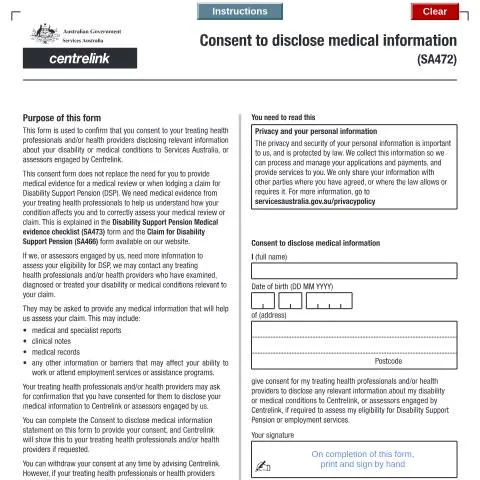
Navigating Medical Disclosure: The Essentials of Form SA472
When it comes to accessing certain governmental services in Australia, understanding the ins and outs of medical information disclosure can significantly impact the process. Form SA472, titled "Consent to Disclose Medical Information," is a pivotal component for those engaged with Services Australia. This document plays a critical role in granting permissions for medical professionals to share vital health information with the necessary government agencies.
Who Should Consider Submitting Form SA472?
Form SA472 is specifically designed for individuals who need to provide consent for their medical information to be shared with Services Australia. This is particularly relevant for those applying for various benefits or services that require medical verification, such as:
- Individuals seeking disability support or specific health-related government assistance.
- Parents or guardians of minors who need to submit medical documentation for child support assessments.
- Foreign nationals applying for visas that necessitate the submission of medical records.
Each scenario presents unique challenges and considerations. For instance, the process may differ considerably between adults and minors, or between Australian citizens and non-citizens. Understanding these nuances is crucial for ensuring compliance and facilitating timely access to services.
The Process: What You Need to Know
Completing and submitting Form SA472 involves several key steps that require attention to detail. It is important to approach this process with thoroughness to avoid any complications that might delay your application.
Step-by-Step Instructions for Completing Form SA472
- Gather Required Information: Before starting the form, ensure you have all necessary personal details, including your Tax File Number (TFN), full name, contact information, and any existing medical records pertinent to your disclosure.
- Complete the Consent Section: Clearly indicate which medical information you are consenting to share. This may include specific diagnoses, treatment records, or ongoing health conditions.
- Signature and Date: Ensure to sign and date the form appropriately, as an unsigned form will not be processed.
- Review: Double-check the details for any errors or omissions. A meticulous review can mitigate the chances of your form being rejected.
Understanding the Medical Information Involved
The medical details shared under Form SA472 can vary widely depending on the individual’s circumstances. It is crucial to be informed about what constitutes sensitive medical information. Generally, the following types of information may be disclosed:
| Type of Medical Information | Description |
|---|---|
| General Health Records | Includes overall health status, treatment history and current health conditions. |
| Psychological Assessments | Any evaluations or treatment related to mental health. |
| Specialist Reports | Reports from doctors or specialists regarding specific health concerns. |
Being aware of what information is being shared helps you make informed decisions regarding your consent.
What Happens After Submission?
After you submit Form SA472, the processing time may vary based on several factors, including the complexity of the medical information being disclosed and the workload of Services Australia. During this waiting period, it is advisable to keep track of the submission and maintain communication with the agency.
Possible Outcomes
- Approval: If the consent is granted, your medical information will be shared as required.
- Request for Further Information: In some cases, Services Australia may require additional documentation or clarification on some aspects of the disclosure.
- Denial: If consent is not sufficient or if the information provided is deemed inadequate, your application may be put on hold.
Understanding these potential outcomes allows you to prepare adequately for what may come next in your application journey.
Addressing Refusals, Errors, or Missing Information
Encounters with refusals or errors during the process of submitting Form SA472 are not uncommon, and knowing how to navigate these challenges is vital. If you face a situation where your consent form is denied or contains errors, here’s what to do:
Reacting to Refusals
A refusal can stem from various reasons, including the inadequacy of the information provided or an incomplete form. If your form is rejected:
- Request Clarification: Contact Services Australia to understand the specific reason for the refusal.
- Adjust and Resubmit: Once you've addressed the concerns, adjust the form accordingly and resubmit.
Handling Errors
For any errors you notice post-submission:
- Contact Immediately: Reach out to Services Australia without delay to inform them of the mistake.
- Provide Correct Information: Offer the correct information to replace the errors as soon as possible.
Understanding Your Rights and Obligations
Submitting Form SA472 imposes certain obligations on the individual regarding the accuracy and completeness of the information provided. Here are some key points to keep in mind:
- Transparency: You are required to provide truthful and complete information in your disclosure.
- Right to Withdraw Consent: If you change your mind, you can withdraw your consent at any time; however, this might affect your access to the requested services.
- Access to Information: You have the right to request access to the information shared under your consent.
Being informed of these rights and obligations not only empowers you but also ensures that you remain compliant with the requirements set forth by Services Australia.
Special Circumstances: Navigating Unique Situations
There are specific scenarios where the use of Form SA472 may require additional considerations. Understanding these situations is essential for a smooth application process.
Minors and Guardians
When dealing with minors, the form must be completed by a parent or legal guardian. This raises unique challenges, particularly in cases of:
- Joint Custody: Both parents may need to consent, which can lead to disputes if there are disagreements.
- Corroborating Medical Information: In cases where medical records are complex, guardians may need to work closely with healthcare providers to compile necessary details.
Foreign Nationals
For foreign nationals or those on temporary visas, additional medical requirements may be stipulated by the Department of Home Affairs. This can include extended waiting periods for processing medical disclosure and greater scrutiny of health records.
Preparing for Submission: Key Documentation
Submitting Form SA472 requires the collection of various documents beyond just the form itself. A checklist can assist in ensuring you have all necessary items ready:
- Completed Form SA472, signed and dated.
- Medical records indicating the information relevant to your disclosure.
- Identification documents, such as a driver’s license or passport.
- Any additional documentation requested by Services Australia.
By proactively preparing these documents, you can streamline the submission process and enhance the likelihood of a favorable outcome.
Final Thoughts on Form SA472 and Medical Confidentiality
Form SA472 is more than just a bureaucratic requirement; it represents a bridge between personal health information and essential government services. Understanding its nuances, implications, and the legislative framework surrounding it can significantly ease your journey. Always remember to take a thoughtful approach, ensuring that you respect both your rights and the obligations that come with consenting to disclose medical information.
Understanding the Consent Process for Disclosing Medical Information
In Australia, the consent process for disclosing medical information is crucial for ensuring patient autonomy and privacy. It is governed by a combination of federal and state laws, as well as ethical guidelines set out by health organizations. Understanding the nuances of this process is essential for both healthcare providers and patients.
Key Principles of Consent
Consent must be informed, voluntary, and specific. This means that patients should fully understand what information is being disclosed, to whom, and for what purpose. Healthcare providers must provide sufficient information to ensure that patients can make a well-informed decision.
- Informed Consent: Patients should be made aware of the implications of disclosing their medical information, including potential risks and benefits.
- Voluntary Consent: Patients must give consent freely, without coercion or undue pressure. They should be able to withdraw their consent at any time.
- Specific Consent: Consent should be tailored to the particular information being disclosed. For instance, a patient might consent to share their medical history with a specialist but not with an insurance company.
Exceptions to the Consent Requirement
While consent is generally required, there are notable exceptions where medical information may be disclosed without consent. These may include:
- Legal Obligations: Healthcare providers may be required to disclose information by law, such as in cases of mandatory reporting for child abuse or public health concerns.
- Medical Emergencies: If a patient is incapacitated and unable to provide consent, providers may disclose necessary information to ensure the patient's safety and well-being.
- Public Interest: In certain circumstances, disclosing medical information may be justified in the public interest, especially if it pertains to preventing serious harm to others.
It's essential for providers to document the rationale behind any disclosures made without consent to maintain transparency and compliance with legal obligations.
The Role of Health Privacy Laws in Consent
Health privacy laws in Australia, particularly the Privacy Act 1988 (Cth) and state-specific legislation, outline the requirements for handling health information. Understanding these laws is vital for both healthcare providers and patients.
Privacy Act 1988 (Cth)
The Privacy Act sets out principles for the handling of personal information, including health data, by private sector organizations. Key provisions include:
- Australian Privacy Principles (APPs): These principles dictate how personal information should be collected, used, disclosed, and stored. For instance, APP 6 deals specifically with the use and disclosure of personal information.
- Health Information: This Act provides specific protections for health information and mandates that consent is obtained before disclosing such information, with limited exceptions.
State Legislation
Each Australian state and territory has its own privacy laws that complement the federal legislation. These laws may have additional requirements or specific provisions regarding the consent process for disclosing medical information. For instance, in Victoria, the Health Records Act 2001 governs the handling of health records, emphasizing the need for consent and the rights of individuals regarding their health information.
Impact on Patients and Providers
Healthcare providers must navigate these laws carefully to ensure compliance while respecting patient rights. Patients, on the other hand, should be aware of their rights under these laws and feel empowered to ask questions regarding how their information is handled.
Practical Steps for Patients to Manage Their Medical Information
Managing medical information and understanding consent can often be overwhelming for patients. However, taking proactive steps can empower individuals and ensure their information is handled according to their wishes.
1. Know Your Rights
Patients should familiarize themselves with their rights concerning the disclosure of their health information. This includes understanding consent requirements, the right to access their medical records, and the ability to request corrections if needed.
2. Communicate Openly with Healthcare Providers
Open communication with healthcare providers is essential. Patients should feel comfortable discussing their preferences regarding the sharing of their medical information. If a patient prefers not to disclose certain aspects of their health or has concerns about how their information will be used, they should voice these concerns.
3. Review Consent Forms Carefully
When presented with consent forms, patients should take the time to read and understand them thoroughly. If anything is unclear, patients should not hesitate to ask for clarification. Understanding the implications of signing a consent form is crucial, as it directly impacts how medical information can be shared.
4. Keep Records of Consent
Patients should keep a personal record of any consent they provide regarding their medical information. This can include copies of signed forms and notes on any verbal agreements made with healthcare providers. This practice can help patients track who has access to their information and ensure that their preferences are respected.
5. Withdraw Consent When Necessary
If a patient decides they no longer want their medical information shared, they have the right to withdraw consent. Patients should inform their healthcare providers in writing if they wish to revoke any previous consent given. Providers are required to respect this decision, barring any legal obligations that may necessitate continued disclosure.
By taking these actionable steps, patients can feel more in control of their medical information, ensuring that their privacy and preferences are upheld in the healthcare system.