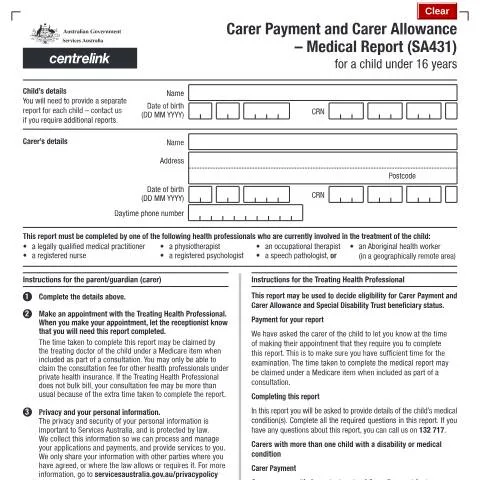
Navigating the Carer Payment and Carer Allowance Medical Report for Children Under 16
Submitting the SA431 form—entitled "Carer Payment and Carer Allowance - Medical Report for a child under 16 years"—is a crucial step for individuals seeking financial support while caring for a child with a disability or chronic illness in Australia. This form is an integral part of the process to access vital benefits from Services Australia, aimed at acknowledging and assisting the often challenging role of carers.
Who Needs to Submit the SA431 Form?
The primary applicants for the SA431 form are individuals who are providing care to children under the age of 16. This includes, but is not limited to:
- Parents or guardians of children with disabilities.
- Foster carers who are taking care of children with chronic health conditions.
- Relatives or other individuals who have taken on the responsibility of caring for a child in need of assistance.
Each of these profiles has its own nuances. For example, foster carers may have specific considerations due to the nature of their arrangements, while relatives or guardians may need to provide additional documentation proving their relationship to the child. Understanding these details is essential before initiating the application process.
Completing the SA431 Form: A Step-by-Step Guide
The completion of the SA431 form requires careful attention to detail. The form is structured in a way that mandates comprehensive information, which can be daunting for first-time applicants. Below is a breakdown of key sections and common pitfalls to avoid:
Personal Details
This section requires the full name, address, and contact information of the carer as well as the child. It's vital to ensure:
- All names are spelled correctly.
- Contact information is current and accurate, allowing Services Australia to communicate efficiently.
Child’s Medical Information
Here, applicants must provide details about the child’s medical condition. This includes:
- The nature of the illness or disability.
- How it affects the child's daily life and ability to care for themselves.
- Relevant medical history and ongoing treatment plans.
Be prepared to attach supporting medical documents. The clearer and more detailed the medical information, the smoother the assessment process will likely be.
Care Arrangements
Detailing the specific care arrangements is crucial. Include:
- The number of hours dedicated to care each week.
- Any professional services currently involved in the child’s care.
Misrepresentations or omissions in this section can lead to delays or even rejection of the application.
Submission Methods: Online vs. Paper
Applicants have several options for submitting the SA431 form, each with its own set of advantages:
Online Submission via myGov
Utilizing the myGov platform allows for paperless submission. Here, you can upload the completed form along with any required documentation directly to Services Australia. The benefits include:
- Faster processing times.
- Confirmation of submission upon uploading.
Paper Submission
If you prefer traditional methods, the paper submission entails mailing the completed form along with any accompanying documents. While this method is straightforward, it can lead to longer processing times due to postal delays and the manual handling of documents.
Understanding the Decision Process: From Submission to Outcome
Once the SA431 form is submitted, several steps unfold:
- Assessment: Services Australia will review the documentation and assess the eligibility based on the provided information.
- Further Information: In some cases, additional information may be requested, potentially prolonging the review process.
- Decision Notification: Applicants will receive written notification regarding the outcome, including any entitlements granted.
It is important to remain aware that during this phase, applicants have the right to appeal the decision if they believe it to be incorrect. The avenues for appeal are specified within the notification letter.
The Stakes: Rights and Responsibilities of Carers
Completing and submitting the SA431 form opens the door to significant benefits that can alleviate financial pressure for carers. However, this process comes with its own set of responsibilities:
- Carers must ensure they keep Services Australia updated with any changes in their circumstances, such as changes in income or the care needs of the child.
- Failure to report changes can result in overpayments or underpayments, impacting future benefit eligibility.
It's essential to maintain clear records of all communication and documentation relating to the application and ongoing care responsibilities.
The Legislative Framework Behind the SA431 Form
The SA431 is governed by a robust legal framework designed to protect the rights of carers and ensure they receive the support they need. This framework includes provisions from legislation such as the Social Security Act and the Administrative Decisions (Judicial Review) Act. This legislation establishes the criteria for care allowances and payments and outlines the rights of individuals to challenge decisions made by Services Australia.
Special Cases: Unique Considerations and Exceptions
Certain scenarios may complicate the application process. These include situations involving:
- Children with complex health needs requiring more in-depth medical assessments.
- Non-citizens or residents applying for benefits where specific eligibility criteria apply.
- Situations where the carer has multiple children requiring care, necessitating a more detailed accounting of care hours and responsibilities.
In such cases, seeking advice from a professional or a support organization may provide clarity and help streamline the application process.
The Importance of Accurate and Timely Submission
Ultimately, the SA431 form represents more than just paperwork; it is a means of ensuring that the carers of children in need receive the support they deserve. Timely and accurate completion of this form can significantly impact the quality of life for both the carer and the child they care for. Therefore, taking the time to carefully prepare each section, understand the implications of the information provided, and maintain open lines of communication with Services Australia is crucial.