Understanding the Profit and Loss Statement: A Vital Document for Australian Individuals
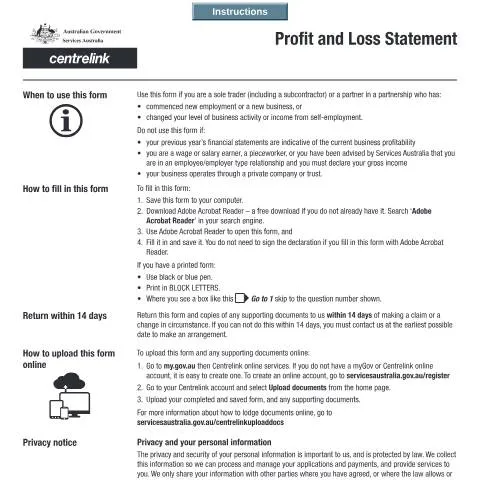
When managing personal finances, being aware of your income and expenses is crucial. This is particularly true for individuals receiving certain government benefits in Australia. The Profit and Loss Statement (Form SU580) serves a pivotal role in this regard, reflecting one’s financial performance over a specific period. It is not just a mere piece of paper; it serves as a testament to one’s economic reality, especially when dealing with Services Australia.
The Lifecycle of the Profit and Loss Statement
Filing the Profit and Loss Statement involves a series of well-defined steps that begin with understanding why you need to submit it in the first place. Let’s follow the lifecycle of this document:
- Initiation: The need to submit a Profit and Loss Statement often arises when applying for or maintaining benefits from Services Australia, such as JobSeeker or Youth Allowance. This is particularly relevant if your income fluctuates significantly.
- Preparation: Collect all relevant financial data. This includes any income sources, expenses, and any other financial engagements you might have.
- Filling Out the Form: This process requires a meticulous approach to ensure accuracy in reporting income and expenses.
- Submission: Once the form is completed, it needs to be lodged with Services Australia, either online or via mail, depending on individual circumstances.
- Review and Outcome: After submission, Services Australia will review the statement to determine your eligibility for benefits.
Navigating Complex Situations: Unique Profiles and Scenarios
The Profit and Loss Statement is not a one-size-fits-all document. Different individuals may find themselves in unique financial situations, which influences how they should approach this document. Here’s a deeper insight:
1. Temporary Residents and Foreign Students
For temporary residents or international students, the reporting process can be more intricate due to unique income streams. Ensure to translate any foreign income into Australian dollars, and be clear about your residency status.
2. Minors and Guardianship
In cases where minors need to submit a Profit and Loss Statement, a guardian must fill it out on their behalf. Here, it's essential to provide documentation proving guardianship and to reflect the minor's actual earnings and expenditures accurately.
3. Individuals with Complex Financial Structures
If you have multiple streams of income, such as investments and part-time work, ensure each source is reported separately, as this can impact your eligibility for benefits. A well-documented breakdown is crucial to avoid delays in processing.
Detailed Examination of the Profit and Loss Statement
Understanding the specific sections of the Profit and Loss Statement will facilitate accurate completion and submission. Here’s a closer look at what you need to fill out:
| Section | Description | Common Pitfalls |
|---|---|---|
| Income Sources | Detail all forms of income, including salaries, government benefits, and any additional earnings. | Omitting part-time work or freelance earnings can lead to discrepancies. |
| Expenses | List all relevant expenses—rent, utilities, and groceries are critical here. | Failing to include necessary living costs may skew the results. |
| Total Profit or Loss | Calculate net profit or loss by subtracting total expenses from total income. | Miscalculations can prompt further scrutiny from Services Australia. |
Enhancing Your Submission: Preparing Supportive Documentation
Alongside the Profit and Loss Statement, certain documentation must be prepared to reinforce your claims. Below are essential documents that might be required:
- Pay slips from all employers for the reporting period.
- Any bank statements that reflect income deposits.
- Invoices or receipts for freelance or contract work.
- Documentation of any government benefits currently received.
- Evidence of expenses, such as rental agreements or bills.
Having these documents organized and readily available can expedite the processing time once you submit your Profit and Loss Statement.
Consequences of Inaccuracies and Failures to Report
Filing inaccuracies can have significant consequences, particularly in the context of benefits provided by Services Australia. Here’s what you should be aware of:
- Overpayments: If you report your income inaccurately, you might receive overpayments, which you'll be required to repay. This can place undue financial strain on you.
- Delays: Incorrect or incomplete forms can lead to processing delays, affecting your access to benefits.
- Audits: Repeated inaccuracies may prompt Services Australia to conduct audits, leading to a more detailed investigation into your finances.
The Broader Framework: Interaction with Other Services
The Profit and Loss Statement does not exist in isolation. It interacts with various other services and processes within the Australian administrative framework. For example:
- When applying for a home loan or rental assistance, the Profit and Loss Statement may be requested to verify your income and expenses.
- Taxation implications: The figures you report may also need to align with your income tax returns, requiring careful cross-referencing with the Australian Taxation Office (ATO).
- Child support assessments may also consider the information present in your Profit and Loss Statement.
This interconnectedness illustrates the importance of thoroughness and accuracy in your submission.
Common Traps to Avoid When Completing the Profit and Loss Statement
Even diligent individuals can make mistakes when completing their Profit and Loss Statement. Here are some pitfalls to avoid:
1. Underreporting Income: Always ensure you include every income source. This includes casual work, bonuses, and any other financial gains. 2. Misclassifying Expenses: Be precise when categorizing expenses. Misclassification may lead to inaccurate reporting of your financial situation. 3. Neglecting to Update Information: If your financial situation changes, such as a new job or a salary increase, it is imperative to update this information promptly.Wrapping It Up: The Importance of the Profit and Loss Statement in Navigating Financial Aid
A well-prepared Profit and Loss Statement is essential for individuals seeking assistance from Services Australia. By accurately documenting your financial situation, you not only comply with regulations but also secure the financial support you may rely on. Remember, this document is part of a larger narrative regarding your financial health and eligibility for benefits.
Always keep in contact with Services Australia if you have uncertainties or need assistance while preparing your statement. They can offer guidance tailored to your specific circumstances, ensuring your submission aligns with their requirements.