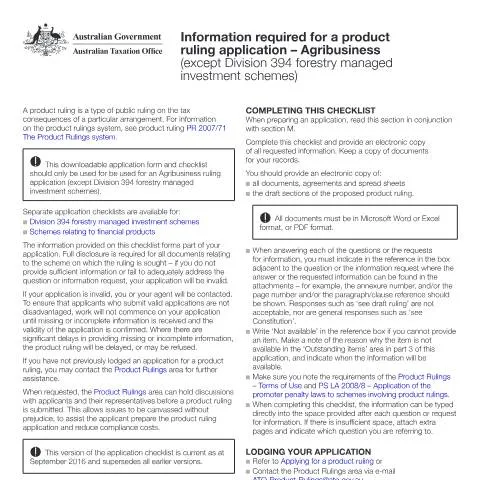
Navigating the ATO’s Product Ruling Application for Agribusiness
When engaging in agribusiness in Australia, particularly under the auspices of the ATO, it’s crucial to understand the intricacies of the Information required for a product ruling application – Agribusiness form. This document is pivotal for those looking to clarify the tax treatment of non-commercial business losses that pertain to agribusiness activities, except for Division 394 forestry managed investment schemes. Navigating this process effectively can determine your eligibility for tax benefits and compliance with Australian tax laws.
Understanding the Purpose and Scope of the Form
While the specifics of this application may seem opaque at first glance, its importance can’t be overstated. This form is designed for agribusiness entities seeking a product ruling from the ATO. A product ruling provides confirmation on how a particular scheme or arrangement will be taxed, offering reassurance to investors or operators about the tax implications of their activities.
It’s essential to recognize that this application is not a mere formality; it's an opportunity to safeguard your investment and ensure that you're operating within the legal framework set by the ATO. By obtaining a product ruling, you can clarify concerns regarding the deductibility of losses, which can significantly influence your financial planning and reporting.
Who Needs to Complete This Document?
Typically, this form is required by individuals, partnerships, or companies involved in the agribusiness sector who wish to obtain certainty regarding the tax treatment of their business activities. This includes:
- Agricultural producers seeking to confirm how their business losses are treated
- Investors exploring involvement in agribusiness ventures
- Partnerships or joint ventures formed around agribusiness initiatives
It’s also relevant for those who may not traditionally think of themselves as agribusiness operators but are engaged in activities that align with this categorization under ATO guidelines.
Step-by-Step Process for Completing the Form
Filling out the application requires careful attention to detail. Here's a breakdown of the typical steps involved:
- Gather Essential Documentation: This includes business records, financial statements, and any previous tax returns that will substantiate your claims.
- Understand the Specific Rubrics: Each section must be filled out with precision. Pay close attention to the requirements of each subsection, as they may differ depending on your business structure.
- Provide Detailed Descriptions: Describe the nature of your agribusiness activities comprehensively. The more clarity you provide, the easier it will be for the ATO to process your application.
- Review and Double-Check: Before submission, ensure that every detail is correct and aligns with your supporting documents.
- Submit the Application: You can choose to lodge your application online via myGov or through traditional mail, depending on your preference.
Decoding the Sections of the Form
The form comprises several sections, each demanding particular information. Here’s a closer look at these sections:
- Part A: Applicant Information - Provide clear and concise details about yourself and your business structure.
- Part B: Business Description - Articulate the specifics of your agribusiness operation. This includes activities, scale, and expected outcomes.
- Part C: Financial Projections - Present a well-founded projection of your financials. Transparency here can significantly influence the ATO's ruling.
- Part D: Compliance Information - Detail any previous rulings or decisions that may impact your current application.
Throughout these sections, be vigilant of common pitfalls such as providing unclear descriptions, submitting insufficient supporting documentation, or misrepresenting financial data. Each of these can lead to delays or potential denials of your application.
Specific Considerations for Unique Cases
Some applicants may find themselves in unique situations requiring careful navigation:
International Entities
Entities based outside Australia looking to engage in agribusiness must be particularly diligent. They need to ensure they meet residency requirements and provide extensive documentation to clarify their operational intent within Australia.
Minor Operators
For individuals under the legal age or those whose operations are managed by guardians, additional scrutiny may apply. Ensure that all legal requirements are met, including any necessary authorizations.
Complex Business Structures
If your agribusiness operates under a more complex structure, such as a trust or partnership, working closely with a tax advisor is advisable. They can assist in navigating the nuances of the form that apply to your specific circumstances.
Submission Methods: Online vs. Paper Applications
Deciding on your submission method can affect processing time and follow-up procedures:
| Method | Advantages | Considerations |
|---|---|---|
| Online via myGov | Faster processing, immediate confirmation of receipt | Requires a myGov account and familiarity with online forms |
| Paper Submission | Suitable for those less comfortable with technology | Longer processing times, potential for postal delays |
Choosing the right method hinges on your comfort level with technology and the urgency of your application.
The Chain of Procedures Following Submission
Once your application is submitted, the journey doesn’t end there. Here’s what typically happens next:
- Initial Review: The ATO will conduct a preliminary review of your submission to ensure completeness.
- Request for Further Information: If any information is lacking, the ATO may reach out for clarification or additional documentation.
- Ruling Issuance: If everything is in order, a product ruling will be issued, detailing the tax treatment of your agribusiness activities.
- Compliance Obligations: Following the ruling, ensure ongoing compliance with any conditions outlined in the product ruling.
Understanding this flow can help you anticipate the next steps and prepare adequately.
Implications of the Product Ruling
Obtaining a product ruling can significantly affect your business operations. This document can open doors to various tax benefits and provide clarity that influences all aspects of your financial strategy.
- Financial Planning: Knowing how your losses are treated provides a clearer picture for budgeting and forecasting.
- Risk Mitigation: A ruling minimizes the risk of unexpected tax liabilities down the track.
- Enhanced Credibility: Having official clarification can enhance your standing with investors and lenders.
However, failing to adhere to the obligations set forth in the ruling can lead to serious repercussions, including penalties or back taxes owed to the ATO.
Positioning the Form Within a Larger Context
This application isn’t just a standalone document; it plays a pivotal role in a broader scheme of tax compliance and business planning. It is often interconnected with:
- Other business registrations and tax obligations
- Long-term investment strategies
- Compliance with local agricultural regulations
Understanding the interdependencies between this product ruling and other regulatory requirements can enhance strategic planning in your agribusiness.
In summary, while the ATO’s Information required for a product ruling application – Agribusiness form may seem daunting, a thorough understanding of its purpose, the steps required for completion, and the implications of your application can lead to significant benefits. Engaging with this document strategically will empower you to navigate the complexities of tax law effectively.
Understanding Product Rulings in Agribusiness
Product rulings are a valuable tool for individuals and entities engaged in agribusiness. They provide clarity on the tax implications and eligibility requirements of specific investment schemes. To obtain a product ruling, applicants must recognize the extensive documentation and evidence required by the Australian Taxation Office (ATO). This process is essential for ensuring compliance with tax obligations and confirming whether the financial products in question align with existing tax laws.
When initiating a product ruling application, the ATO requires comprehensive information that substantiates the nature of the investment, its financial structure, and its intended outcomes. Specifically, applicants should prepare a detailed description of the agribusiness scheme, including:
- The type of agricultural activities involved, such as horticulture or livestock production.
- The operational framework of the business, including management practices and revenue generation methods.
- Financial projections and assumptions that underpin the investment strategy.
- The roles and responsibilities of all parties involved in the management and operational execution of the scheme.
Beyond the initial application, the ATO may also request additional supporting documents, such as legal opinions, feasibility studies, and prior tax returns, to evaluate the legitimacy and viability of the agribusiness investment. Thus, accurate record-keeping and thorough documentation from the outset are vital for a successful application.
Common Challenges and Considerations
Applying for a product ruling can be a complex and nuanced process, particularly in the agribusiness sector. Several common challenges may arise that applicants should be aware of:
- Complexity of Regulations: Agribusiness investments are subject to a wide range of regulations, both at the federal and state levels. Understanding the interplay between these regulations and the tax implications is crucial. Applicants should consult with tax advisors who specialize in agribusiness to navigate this complexity.
- Changing Legislation: Tax laws in Australia are subject to frequent changes. Thus, it is important for applicants to stay updated on the latest legislative developments that could impact their investment outcomes. Utilizing resources from the ATO and industry bodies can serve as valuable references.
- Evidence of Commercial Viability: The ATO requires compelling evidence to substantiate the commercial viability of the agribusiness investment. This may include market analysis, expert testimonials, and comparative studies. Failing to provide adequate evidence could lead to the rejection of the ruling application.
- Timeliness of Submission: Applicants must be mindful of submission deadlines, as the ATO processes product ruling applications based on the financial year they pertain to. Late submissions could result in lost opportunities for tax benefits.
To successfully mitigate these challenges, applicants are encouraged to develop a robust application strategy that includes early engagement with ATO representatives and consultation with professional advisors. Formulating a comprehensive timeline that outlines key milestones can help keep the application process on track.
Impact of Rulings on Investment Decisions
Obtaining a product ruling can significantly influence investment decisions within the agribusiness sector. A favorable ruling provides investors with confidence regarding the tax implications of their investment, potentially leading to increased participation in the market. Here's how a product ruling can impact investment decisions:
- Tax Certainty: A product ruling can clarify the tax treatment of specific investments, allowing investors to assess their potential returns without the uncertainty of future tax liabilities. This certainty can be a decisive factor for attracting new investors into agribusiness ventures.
- Attracting Funding: Banks and financial institutions are more likely to provide financing for agribusiness investments that have received a favorable product ruling. This can ease cash flow concerns and allow businesses to expand their operations or enter new markets.
- Informed Decision-Making: A product ruling outlines the tax benefits and obligations associated with a given investment. This information allows investors to make well-informed decisions regarding resource allocation, project timelines, and risk management strategies.
- Enhanced Market Reputation: Companies that have secured product rulings may enhance their reputation within the agribusiness community. This can lead to stronger partnerships and collaborations with other stakeholders, including suppliers, retailers, and service providers.
In conclusion, understanding the significance of product rulings in agribusiness investments is essential for navigating the complexities of tax obligations and maximising financial outcomes. Engaging proactively with the ATO and preparing thorough documentation can ultimately lead to more informed investment decisions, contributing to the overall growth and sustainability of the agribusiness sector in Australia.