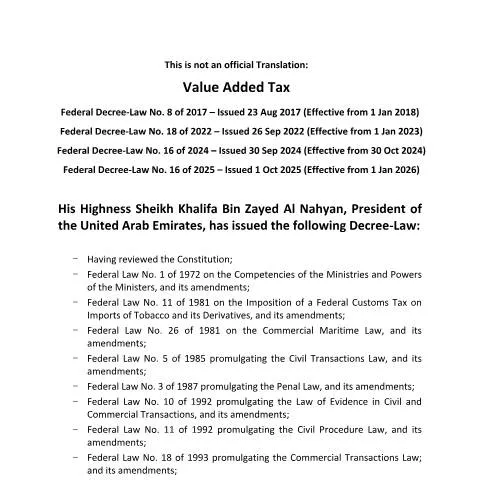
Understanding Federal Decree-Law No. 8 of 2017 and Its Amendments on Tax Legislation in the UAE
The Federal Decree-Law No. 8 of 2017 represents a significant legislative framework governing taxation within the United Arab Emirates (UAE). As part of the country's broader efforts to establish a transparent and efficient tax system, this decree, along with its subsequent amendments, sets out the foundational principles, scope, and responsibilities related to tax regulation. This guide aims to clarify the key aspects of this legislation, identify the entities it concerns, and outline the mechanisms for compliance under the UAE's digital administrative environment.
Context and Scope of Federal Decree-Law No. 8 of 2017
The decree was enacted to formalize the UAE’s approach to taxation, aligning with the country's strategic economic diversification objectives. It establishes the legal basis for implementing various tax types, including value-added tax (VAT), excise tax, and other potential levies, ensuring consistency and legal certainty across all emirates. Importantly, this law operates within the framework of the UAE Constitution, which affirms the federal system while granting specific autonomous powers to individual emirates.
Furthermore, the decree emphasizes the importance of digitalization in tax administration. It mandates the use of electronic platforms and online portals for filing, payment, and communication processes, reflecting the UAE’s commitment to innovative, paperless government services.
Who Is Affected by the Legislation?
This legislation applies broadly to all entities engaged in economic activities within the UAE, including:
- Businesses and Commercial Entities: Companies registered under UAE commercial law, whether local or foreign, must comply with the tax obligations stipulated by the decree.
- Individuals: Certain individuals involved in taxable activities, such as freelancers or self-employed professionals, are also subject to relevant tax provisions.
- Government and Public Sector Entities: All government bodies involved in economic transactions are required to adhere to the reporting and compliance standards set forth in the law.
It is essential for these stakeholders to understand their responsibilities, including registration procedures, tax filings, and record-keeping, all facilitated through the digital platforms mandated by the law.
Key Provisions and Points of Attention
Tax Registration and Compliance
Entities engaged in taxable activities are required to register with the Federal Tax Authority (FTA) through their online portal. The registration process is designed to be streamlined, leveraging the UAE Pass digital identity system, ensuring secure and efficient access to tax services.
Tax Filing and Payment
Taxpayers must submit periodic tax returns electronically via the FTA portal. The law specifies deadlines and procedures for filing, emphasizing timely compliance to avoid penalties. Payments are also processed digitally, aligning with the UAE’s e-government initiatives.
Record-Keeping and Audits
Taxpayers are mandated to maintain accurate records of their transactions and financial statements. The law grants the FTA authority to conduct audits and review submissions to ensure adherence to tax obligations.
Amendments and Updates
The legislation is subject to amendments aimed at refining tax procedures, expanding the scope of taxable activities, or introducing new tax types. Stakeholders are encouraged to stay informed through official channels and updates from the Federal Tax Authority.
References and Authorities
The primary reference for this legislation is the Federal Decree-Law No. 8 of 2017, which is complemented by subsequent amendments and regulations issued by the Federal Tax Authority (FTA). The FTA is the official federal agency responsible for implementing, monitoring, and enforcing tax laws within the UAE.
Additionally, the legislation aligns with the broader legal framework established by the UAE government, including the UAE Constitution and relevant federal laws on economic and financial regulation.
Conclusion
Federal Decree-Law No. 8 of 2017, along with its amendments, forms the backbone of the UAE’s modern tax system. It underscores the country's commitment to digital governance, legal clarity, and economic transparency. Stakeholders are advised to utilize the official digital platforms and stay updated with the FTA’s communications to ensure full compliance with the law’s requirements and to benefit from the streamlined, paperless administrative processes now available in the UAE.