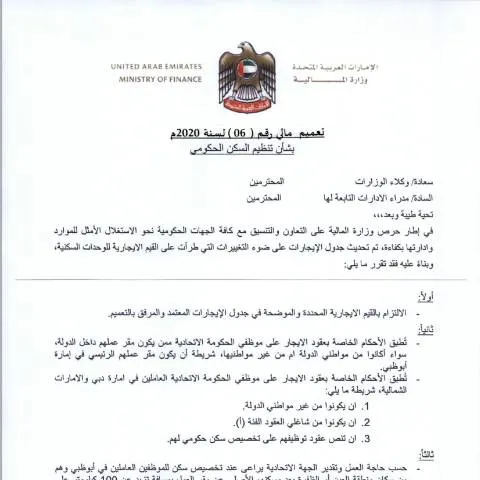
Overview of the Financial Circular No (6) of 2020 on Government Housing Regulations
The Financial Circular No (6) of 2020 issued by the relevant authorities in the United Arab Emirates provides essential guidance concerning government housing policies and regulations. This circular aims to establish clear procedures and standards to ensure transparency, efficiency, and compliance within the framework of government housing management. It reflects the UAE’s commitment to maintaining a well-regulated housing sector aligned with national legal and fiscal policies.
Scope and Applicability
This circular applies to all government entities involved in the planning, allocation, and management of government housing resources across the UAE. It is designed to standardize procedures related to housing allocations, subsidies, and maintenance, ensuring a unified approach across different emirates. The regulations also encompass the criteria for eligibility, the responsibilities of involved authorities, and the mechanisms for monitoring and reporting compliance.
Main Provisions and Key Highlights
Housing Allocation and Eligibility Criteria
The circular emphasizes the importance of transparent and equitable procedures for allocating government housing. It stipulates that allocations should be based on clear eligibility criteria, which include factors such as employment status, family size, and residency duration. Priority is given to eligible employees and individuals with special needs, aligning with broader social welfare objectives.
Maintenance and Upkeep Standards
To ensure the longevity and safety of government housing, the circular sets forth mandatory standards for maintenance and periodic inspections. Authorities are tasked with establishing schedules for routine repairs and upgrades, and ensuring that housing units meet safety, health, and environmental standards.
Financial Management and Transparency
The circular underscores the importance of sound financial practices in managing government housing funds. It mandates detailed record-keeping and regular audits to prevent misuse of resources. The policy also encourages digital record management to enhance transparency and facilitate oversight by relevant authorities.
Procedural Compliance and Reporting
All involved entities are required to adhere strictly to the procedures outlined in the circular. This includes submitting periodic reports on housing allocations, maintenance activities, and financial expenditures. These reports are essential for monitoring compliance and assessing the effectiveness of housing policies.
Implications for Government Employees and Stakeholders
For government employees and eligible individuals, this circular clarifies the process for obtaining and maintaining government housing. It aims to streamline application procedures, reduce administrative delays, and ensure fair access based on established criteria. Stakeholders are encouraged to familiarize themselves with the regulations to ensure compliance and to benefit from the support mechanisms available.
Digitalization and Future Directions
Reflecting the UAE’s broader digital transformation initiatives, the circular advocates for the integration of digital platforms in housing management processes. This includes the use of electronic applications, online tracking systems, and digital reporting tools. Such measures are designed to enhance efficiency, reduce paperwork, and improve service delivery to the public.
Conclusion
Financial Circular No (6) of 2020 plays a crucial role in shaping the governance of government housing in the UAE. By establishing clear guidelines and standards, it aims to promote transparency, accountability, and fairness in the management of public housing resources. All relevant authorities and stakeholders are expected to align their practices with these regulations to support the UAE’s vision of sustainable and equitable urban development.