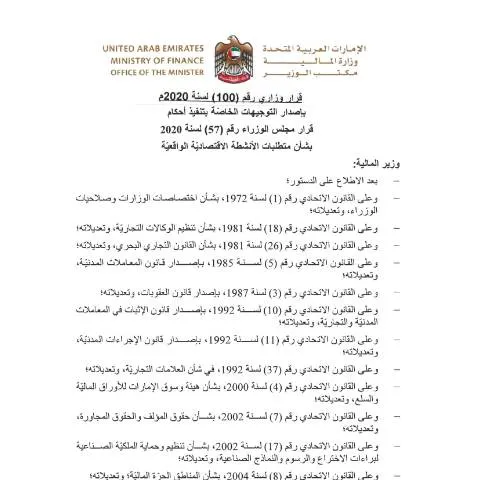
Overview of Ministerial Decision No (100) of 2020 on Economic Substance Requirements
The Ministerial Decision No (100) of 2020 issued by the United Arab Emirates Ministry of Finance establishes the regulatory framework for implementing the economic substance requirements outlined in Cabinet Decision No (57) of 2020. This decision is a crucial regulatory measure aimed at aligning the UAE’s financial and economic activities with international standards for transparency and tax compliance, particularly in response to global efforts against tax evasion and money laundering.
Scope and Objectives of the Decision
This decision applies to entities engaged in specific economic activities within the UAE that are listed in the relevant regulations. Its primary objective is to ensure that these entities demonstrate substantial economic presence and activity within the UAE, thereby reinforcing the country’s commitment to transparency and fair taxation.
The decision mandates that entities conducting certain activities must meet specific criteria related to their operational presence, governance, and economic activities carried out within the UAE. It aims to prevent the misuse of the UAE’s financial system for tax evasion or illicit financial flows by requiring entities to establish genuine economic activities locally.
Main Provisions and Requirements
Definition of Relevant Activities
The decision clearly defines the scope of activities subject to economic substance requirements. These include, but are not limited to, banking, insurance, investment funds, shipping, and holding companies. The entities involved in these activities must demonstrate that their core income-generating activities are conducted within the UAE and are adequately managed locally.
Obligations for Entities
- Operational Presence: Entities must maintain a physical office, employ qualified personnel, and have an operational infrastructure within the UAE.
- Management and Control: Decision-making processes must be conducted within the UAE, with key management decisions made locally.
- Financial and Tax Records: Entities are required to keep accurate and complete records of their activities, which must be accessible for review by the relevant authorities.
Reporting and Compliance
Entities falling under the scope of this decision are required to file annual reports confirming their compliance with the economic substance requirements. These reports should include details about their activities, management structure, and operational presence within the UAE.
Implications for Businesses and Entities
This decision significantly impacts how businesses operating in the UAE structure their activities and governance. Entities involved in the specified activities must review their operational arrangements to ensure compliance with the new requirements. Failure to meet these obligations can result in penalties, sanctions, or even restrictions on their ability to operate within the country.
Furthermore, the decision enhances the UAE’s international reputation as a transparent and compliant jurisdiction. It aligns local regulations with global standards set by organizations such as the OECD and FATF, promoting a more robust and credible business environment.
Legal and Administrative Framework
The decision is part of a broader legal framework that includes various laws and regulations aimed at strengthening the UAE’s financial and economic integrity. These include laws related to anti-money laundering, combating the financing of terrorism, and corporate governance.
Entities and stakeholders are advised to stay informed about updates and clarifications issued by the Ministry of Finance and relevant authorities to ensure ongoing compliance.
Conclusion
The Ministerial Decision No (100) of 2020 is a pivotal regulation that enforces the UAE’s commitment to economic transparency and fair taxation. It requires entities engaged in specific activities to demonstrate genuine economic presence within the country, aligning local practices with international standards. Businesses should review their operational structures and ensure full compliance to avoid penalties and maintain their license to operate within the UAE’s dynamic economic environment.