Navigating the Complexities of تعميم بشأن الحسابات غير الموثقة
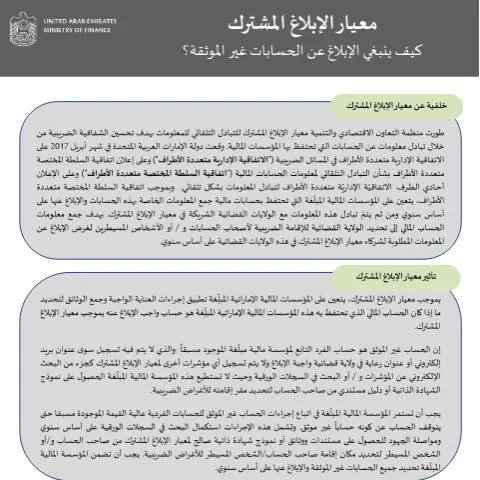
The تعميم بشأن الحسابات غير الموثقة وفقاً لمعيار الإبلاغ المشترك, issued by the التبادل التلقائي للمعلومات, serves a crucial role in enhancing tax transparency within the UAE and among partner jurisdictions. This document is not merely a form; it encapsulates a wide-ranging obligation that impacts various stakeholders, especially financial institutions. Understanding the precise requirements and implications of this document is essential for compliance and effective decision-making.
Understanding the Context: What Triggered the Need for Reporting?
The urgency for transparent financial reporting in the UAE arose from international pressures to comply with global tax standards. In April 2017, the UAE signed the Multilateral Competent Authority Agreement concerning the Common Reporting Standard (CRS) developed by the OECD. This agreement obligates financial institutions to report financial accounts held by non-resident individuals and entities to their respective tax authorities.
The need for reporting unverified accounts became apparent as tax authorities sought a clear pathway to trace tax liabilities and ensure that all individuals and entities are contributing their fair share. This led to the creation of the reporting framework that is encapsulated in the تعميم.
The Role of Financial Institutions in the Reporting Process
Under the provisions of the تعميم, financial institutions are the primary entities responsible for filing reports on unverified accounts. These institutions must follow stringent due diligence procedures to identify accounts that require reporting. In essence, the financial institutions must:
- Conduct thorough research to ascertain the residency status of account holders.
- Collect and verify documentation from account holders to validate their tax residency.
- Regularly update their findings and maintain accurate records for compliance purposes.
Key Responsibilities of Reporting Institutions
To navigate through the complexities of this reporting requirement, financial institutions must:
- Identify accounts that qualify as unverified based on minimum documentation.
- Continue efforts to obtain valid self-certification forms or documentary evidence from account holders.
- Submit annual reports detailing the unverified accounts by January 31 each year.
Filling Out the تعميم: What You Need to Know
Completing the تعميم involves meticulous attention to detail and an understanding of various technical aspects. The process can be broken down as follows:
- Identify Accounts: Begin with an internal audit to locate accounts that lack sufficient documentation and are deemed unverified.
- Documentation Collection: Engage with account holders to gather necessary documentation, such as proof of residency, tax identification numbers, and other relevant data.
- Report Submission: Complete the official reporting form available on the التبادل التلقائي للمعلومات portal.
Detailed Steps for Completing the Report
Each step must adhere to guidelines provided by the التبادل التلقائي للمعلومات. Here's a succinct breakdown:
| Step | Description | Required Documentation |
|---|---|---|
| 1 | Account Identification | Account holder's name, account number |
| 2 | Documentation Collection | Proof of residency, tax identification |
| 3 | Report Compilation | Comprehensive account details |
| 4 | Submission | Completed report format |
Timeline: From Initiation to Submission
Understanding the timeline associated with the تعميم is vital for both compliance and operational efficiency. The following stages outline the general timeline:
- Initial Notification: Financial institutions receive guidance on unverified accounts by the end of December each year.
- Documentation Phase: Institutions have until January 30 to gather and verify the necessary documentation.
- Submission Deadline: All reports must be submitted to the التبادل التلقائي للمعلومات by January 31.
- Annual Review: Post-submission, institutions must conduct an annual review to ensure ongoing compliance.
Special Cases: Navigating Complex Situations
While the guidelines for reporting are straightforward, certain situations may require additional consideration:
- Foreign Nationals: Different reporting requirements may apply depending on the residency status of the account holder.
- Minors: Accounts held in the name of minors may necessitate the involvement of guardians for documentation.
- Complex Structures: Entities with multiple account holders or complex ownership structures may require additional scrutiny.
Addressing Emergencies and Unforeseen Circumstances
In cases where documentation cannot be obtained in time, institutions must have contingency plans. Options may include:
- Seeking extensions from local tax authorities.
- Implementing interim measures while efforts to collect documentation continue.
Understanding the Consequences of Non-Compliance
Failure to comply with the تعميم can have significant repercussions for financial institutions, including:
- Financial Penalties: Non-compliance can result in hefty fines imposed by regulatory authorities.
- Reputational Damage: Institutions may suffer reputational loss, affecting customer trust and future business.
- Increased Scrutiny: Regulatory bodies may subject non-compliant institutions to greater scrutiny in future audits.
Rights and Responsibilities of Account Holders
It is essential for account holders to be aware of their rights and responsibilities under the تعميم:
- Transparency: Account holders have the right to understand why their information is being collected and reported.
- Obligations: They are obligated to provide accurate and timely information to their financial institutions.
Integrating the تعميم into Broader Compliance Frameworks
The تعميم does not exist in isolation; it is an essential component of a more extensive compliance framework aimed at achieving international standards of tax transparency. Financial institutions must ensure that:
- The تعميم is integrated with anti-money laundering (AML) policies and Know Your Customer (KYC) procedures.
- Regular training and updates are provided to staff regarding the requirements of the تعميم and its implications.
- Audits are conducted regularly to ensure that procedures align with the evolving legislative environment.
Leveraging Technology for Enhanced Compliance
Advanced technologies can assist financial institutions in adhering to the تعميم:
- Data Analytics: Utilizing data analytics to identify trends and anomalies in client information can streamline the reporting process.
- Document Management Systems: Implementing robust document management solutions ensures secure and efficient handling of sensitive account documentation.
Practical Tips for Ensuring Compliance
Here are essential tips for financial institutions to maintain compliance with the تعميم:
- Stay Informed: Regularly review updates from the التبادل التلقائي للمعلومات regarding any changes to compliance requirements.
- Engage in Continuous Training: Conduct workshops and training sessions for staff to ensure awareness and understanding of compliance obligations.
- Establish Clear Communication Channels: Ensure that account holders are informed of their responsibilities and the importance of maintaining accurate records.
Understanding the Consequences of Non-Compliance with the Common Reporting Standard (CRS) in the UAE
The Common Reporting Standard (CRS) is an international standard for the automatic exchange of financial account information between tax authorities. The UAE, like many other countries, has committed to implementing this standard. However, non-compliance or failure to document accounts can lead to significant repercussions. Understanding the potential penalties and consequences is essential for individuals and entities operating in the UAE.
Firstly, individuals who do not comply with the CRS may face hefty fines imposed by the Federal Tax Authority (FTA). These fines can vary based on the severity of the non-compliance, whether it be failure to report, under-reporting, or not maintaining adequate documentation. Moreover, non-compliance could also affect one's ability to open bank accounts or conduct transactions with financial institutions in the UAE, as banks are obligated to adhere to CRS guidelines.
On a corporate level, companies that fail to comply may risk their licenses or face additional scrutiny from regulatory bodies. This can lead to a loss of trust from stakeholders, clients, and partners, thereby impacting business operations. Additionally, there may be international repercussions, such as being flagged in other jurisdictions that may lead to more extensive audits and examinations from foreign tax authorities. It is imperative that organizations take the necessary steps to ensure compliance with the CRS to mitigate these risks.
The Role of Financial Institutions in Ensuring Compliance with CRS
Financial institutions play a crucial role in the implementation of the Common Reporting Standard. They are tasked with identifying reportable accounts and ensuring accurate reporting to the appropriate tax authorities. This responsibility is especially critical given the evolving nature of compliance regulations and the increasing emphasis on transparency in the global financial landscape.
To aid in compliance, financial institutions in the UAE must establish robust systems and processes to collect necessary information from account holders. This may involve updating Know Your Customer (KYC) procedures to capture CRS-specific data, including the tax residency of account holders. Institutions should also provide training for employees to ensure they understand the nuances of the CRS, including how to identify reportable accounts and the importance of due diligence.
Furthermore, financial institutions must maintain accurate and up-to-date records to facilitate seamless reporting. This includes regularly updating account information and ensuring that any changes in an account holder's status are promptly reported. By taking proactive measures, financial institutions can not only fulfill their obligations under the CRS but also enhance their reputation as compliant entities in the financial sector.
Implications of CRS for Expatriates Residing in the UAE
For expatriates living in the UAE, the Common Reporting Standard has significant implications regarding their financial affairs. Many expatriates may have financial accounts in their home countries that are subject to reporting under the CRS. Consequently, they need to be aware of how the CRS affects their tax obligations and reporting requirements in both the UAE and their home countries.
Expatriates should conduct a thorough review of their financial accounts to identify which ones are reportable under CRS guidelines. It is advisable to seek assistance from tax professionals who are familiar with both UAE tax regulations and the tax laws of the expatriate's home country. These professionals can provide guidance on how to ensure compliance and avoid potential penalties for non-reporting.
Additionally, expatriates should be aware of the potential impact on their investments and savings. Some expatriates might consider restructuring their financial portfolios to mitigate tax implications or streamline compliance with CRS. This may involve consolidating accounts or exploring tax-efficient investment options. Being proactive in addressing these issues can help expatriates manage their financial health while residing in the UAE.